
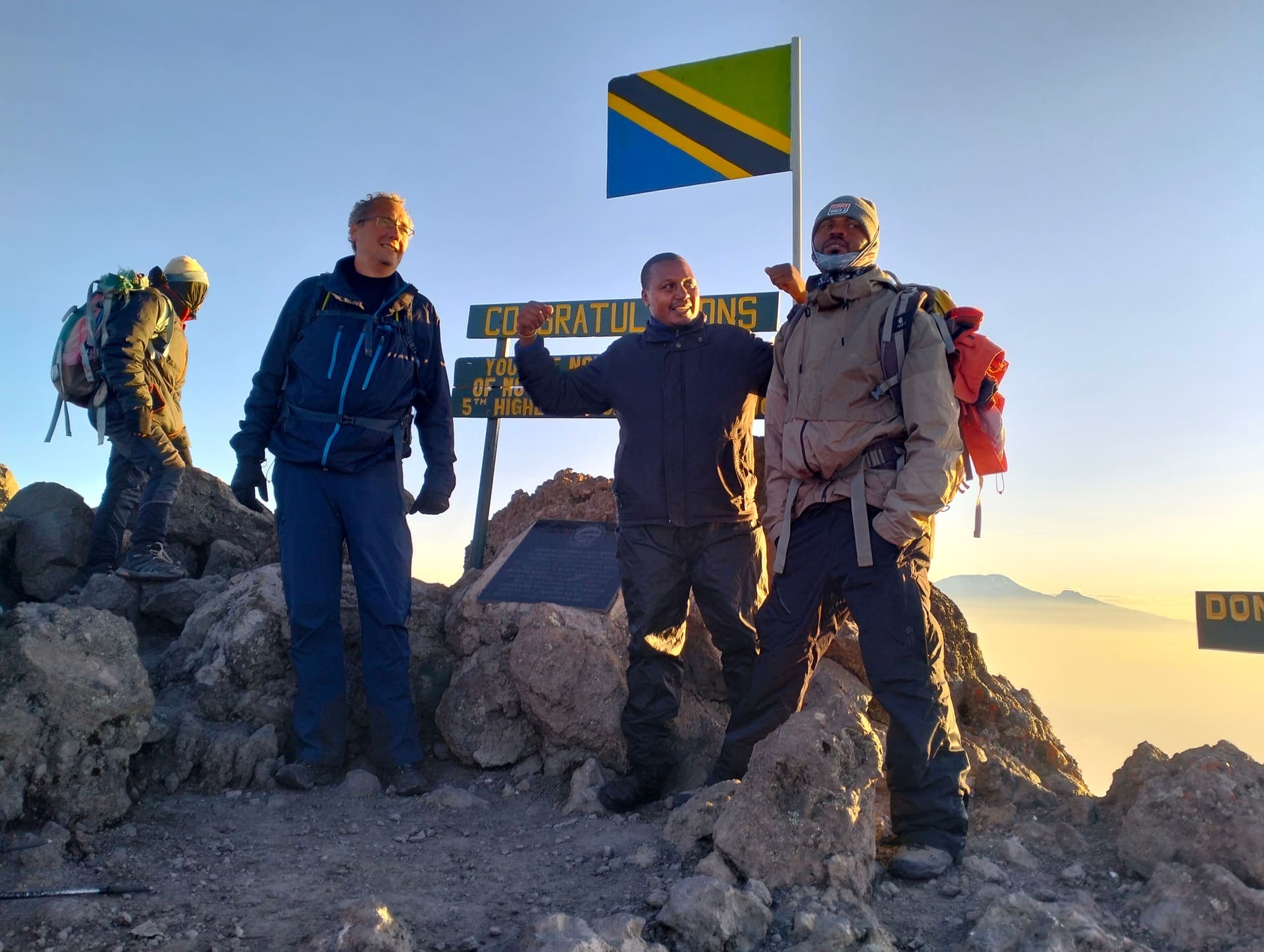
5-Day Climb · budget
5-Day Kilimanjaro Climb – Marangu Route
Price for 1 person
$2,850
per person
Less in a group: $1,999 each for 7+ climbers. See every group size
Climb Kilimanjaro in 5 days on the classic Coca-Cola Route to Uhuru Peak — one of the most established ways to climb Africa's highest mountain, sleeping in mountain huts instead of tents.
The 5-day Marangu Route is one of the most established ways to climb Mount Kilimanjaro, Africa's highest mountain, reaching an elevation of 5,895 metres at Uhuru Peak. Often known as the Coca-Cola Route, Marangu is famous for its established hiking trail, scenic landscapes and mountain huts, making it different from Kilimanjaro routes that rely on tented camping.
Your journey begins in the lush tropical rainforest on Kilimanjaro's lower slopes, continues through the beautiful moorland and alpine landscapes around Horombo and Kibo huts, and culminates in the demanding overnight ascent towards Uhuru Peak. If conditions permit and you are physically prepared, you will stand on the summit of Africa's highest mountain and enjoy the extraordinary experience of watching the sun rise above the surrounding landscape.
The Marangu Route follows the historic eastern approach to Kilimanjaro. It became internationally famous through the early European expeditions, including Hans Meyer's successful summit in 1889. Today, it remains a popular choice for climbers who prefer hut accommodation and a clearly established trail.
At Trust Tours & Safaris, we organise Kilimanjaro climbs with an emphasis on experienced local mountain guides, professional support staff, appropriate equipment, careful monitoring of altitude-related symptoms and a well-coordinated mountain experience. Our goal is to help you prepare confidently, understand the demands of the climb and give yourself the best reasonable opportunity to reach Uhuru Peak safely.
Please note: the five-day Marangu itinerary is a demanding schedule with limited acclimatisation time. A six-day Marangu climb, which adds an extra acclimatisation day around Horombo Hut, is generally the better choice for improving adaptation to altitude. No operator can guarantee a summit.
- Duration
- 5 days / 4 nights on the mountain
- Route
- Marangu Route
- Highest point
- Uhuru Peak, 5,895 m
- Difficulty
- Challenging
- Accommodation
- Mountain huts
- Trek style
- Guided trekking expedition
- Start and finish
- Marangu Gate, Kilimanjaro National Park
- Best for
- Experienced hikers and physically fit travellers seeking a shorter itinerary
Highlights
- Reach Uhuru Peak at 5,895 metres, the highest point in Africa, if conditions and your health allow.
- Hike through Kilimanjaro's changing ecological zones, from tropical rainforest to moorland, alpine desert and the high-altitude summit zone.
- Sleep in established mountain huts instead of tents.
- Enjoy views of Mawenzi Peak, Kibo Peak and the distinctive volcanic landscapes of Kilimanjaro.
- Walk through the giant heather and moorland vegetation of the higher mountain slopes.
- Experience the demanding midnight summit ascent under a sky that can be filled with stars.
- Climb with a professional mountain guide and a supporting mountain crew.
- Receive guidance on altitude awareness, hydration, pacing and preparation before and during the expedition.
Best months to climb: Jan · Feb · Mar · Jun · Jul · Aug · Sep · Oct
5-day climbing
Price per person
| Route | 1 pax | 2 pax | 3 pax | 4 pax | 5 pax | 6 pax | 7+ pax |
|---|---|---|---|---|---|---|---|
| Marangu route 5 days | $2,850 | $2,550 | $2,550 | $2,450 | $2,350 | $2,250 | $1,999 |
5 days / 4 nights on the mountain, sleeping in mountain huts.
How the prices work
The solo price reflects the higher cost of organising a private expedition for one climber, while two-person and larger groups can share certain operational costs. The price for seven or more climbers is a starting estimate and may change according to the final group size, travel dates, accommodation arrangements before and after the climb, and any additional services requested.
These prices are intended for a quality guided mountain expedition rather than a stripped-down budget climb. They are realistic planning prices for 2027–2028. The 2-person rate assumes two climbers booking together and sharing a hotel room. Solo pricing includes the additional cost of operating the expedition for one climber. Larger groups require confirmation of crew capacity and safe guide-to-climber ratios.
Before you pay a deposit, we confirm your final price, payment schedule, cancellation terms and any optional services in writing.
Our pricing commitment: we provide a clear breakdown of the costs included in your climb so that you can understand the services covered and identify any additional expenses before confirming your booking.
Guides, crew and transport are shared by the whole party, so the more of you there are, the less each person pays. Travelling alone? You can also join a group departure.
Day-by-Day Itinerary
Route profile
5 days on the mountain · highest point 5,895 m · about 69 km
Swipe sideways to see every day →
- 1
Day 1
Marangu Gate to Mandara Hut
1,870 m → 2,720 m8 km4–5 hours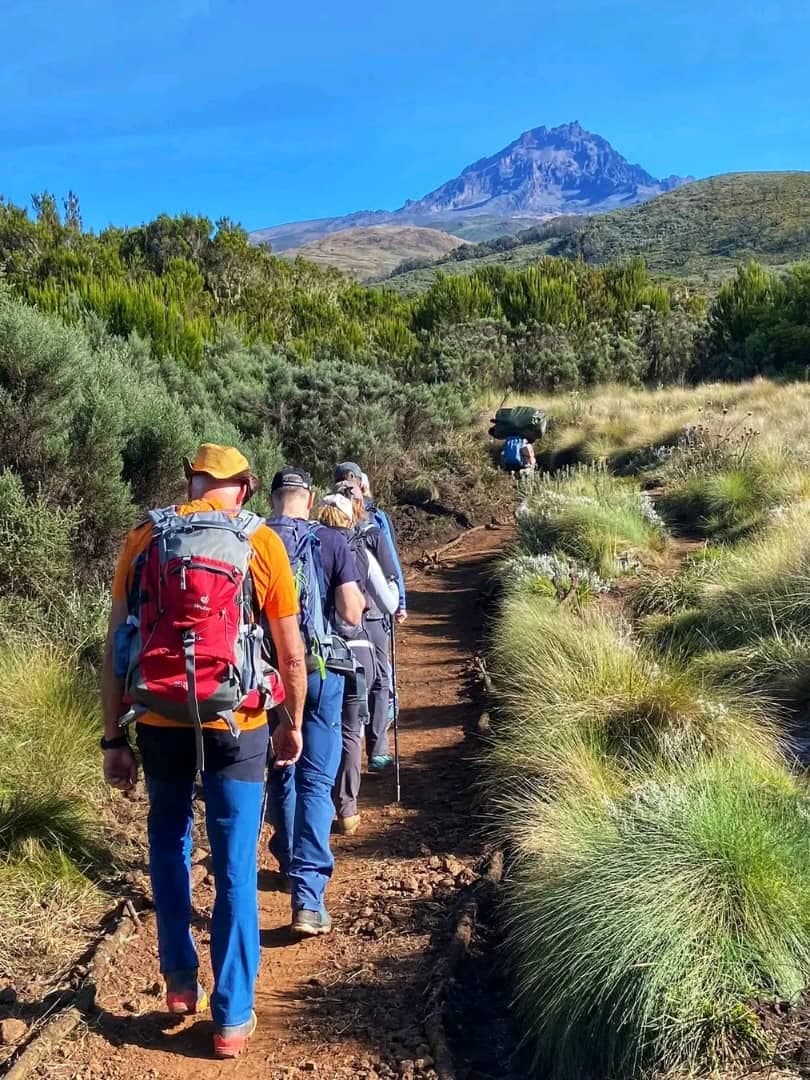
Your Kilimanjaro adventure begins after breakfast, when your mountain guide meets you for a briefing and checks that you have the essential personal equipment required for the climb. We will then travel to Marangu Gate, the main entry point for the Marangu Route, where the team completes the necessary registration and national park entry procedures before the trek begins.
Once the formalities are completed, you will start hiking through the lush tropical rainforest on Kilimanjaro's eastern slopes. This first section follows an established forest trail shaded by tall trees, dense vegetation, moss-covered trunks and ferns, creating a refreshing introduction to the mountain environment. The forest is home to a variety of birdlife and, occasionally, monkeys and other wildlife, although sightings cannot be guaranteed.
Your guide will establish a comfortable walking pace from the beginning, encouraging you to move steadily rather than quickly. The familiar mountain-climbing principle of pole pole, meaning “slowly, slowly” in Swahili, is especially important because the objective is to conserve energy and begin adapting gradually to the increasing altitude.
Along the way, there will be opportunities to rest, drink water, take photographs and learn about the forest ecosystem. Your guide will explain how Kilimanjaro's vegetation changes with elevation and why walking at a controlled pace is essential for a successful mountain expedition.
After approximately four to five hours of hiking, depending on your pace and trail conditions, you will reach Mandara Hut. Here, you can settle into the mountain accommodation, enjoy a warm meal prepared by the mountain team and relax after your first day on the trail. Your guide will also check how you are feeling and discuss the following day's hike.
A scenic rainforest hike, introduction to the mountain environment, gradual elevation gain and your first night in a Kilimanjaro mountain hut.
- Overnight:
- Mandara Hut
- Meals:
- Lunch and dinner
- 2
Day 2
Mandara Hut to Horombo Hut
2,720 m → 3,720 m12 km6–8 hoursAfter breakfast at Mandara Hut, you will continue towards Horombo Hut, following the trail as it gradually leaves the dense rainforest and opens into the heath and moorland zone. The landscape changes noticeably as the vegetation becomes shorter, the views become wider and the mountain's volcanic character becomes increasingly visible.
During the ascent, you may see giant heathers, unusual high-altitude plants and open slopes with expansive views towards the surrounding countryside. When the weather is clear, the dramatic peaks of Mawenzi and Kibo may come into view, providing some of the most memorable scenery of the Marangu Route.
Your guide will maintain a steady pace and encourage regular hydration and appropriate rest breaks. The distance is longer than on the first day, and the increase in altitude can make the walk feel more demanding even if you are physically fit. It is important to communicate honestly with your guide about headaches, nausea, dizziness, unusual fatigue, breathlessness or other symptoms rather than trying to hide discomfort.
A picnic lunch or a prepared meal will be arranged according to the mountain team's schedule and the conditions along the route. After lunch, the trek continues through the open moorland towards Horombo Hut, where you will arrive in the afternoon.
Horombo is an important overnight stop on the Marangu Route, offering views of the surrounding high-altitude landscape and a place to rest before the climb towards Kibo Hut. On arrival, you will have time to settle in, enjoy dinner and prepare your equipment for the following day.
Because this is the five-day itinerary, the schedule does not include a dedicated additional acclimatisation day at Horombo. This is one of the main reasons the five-day option is more demanding than the six-day version.
A longer mountain hike, changing vegetation, panoramic highland scenery and arrival at Horombo Hut.
- Overnight:
- Horombo Hut
- Meals:
- Breakfast, lunch and dinner
- 3
Day 3
Horombo Hut to Kibo Hut
3,720 m → 4,703 m10 km5–7 hoursYou will start the day with breakfast at Horombo Hut before continuing towards Kibo Hut, the final overnight stop before the summit attempt. As you climb higher, the landscape becomes increasingly sparse, with fewer plants, open rocky ground and broad alpine terrain shaped by Kilimanjaro's volcanic history.
The route generally crosses the saddle between Mawenzi and Kibo, a high-altitude landscape that can feel remote and exposed. The terrain is often more open than the rainforest and moorland sections below, and weather conditions can change quickly. Your guide will monitor the pace, make suitable rest stops and ensure that the team remains together.
Although the walking trail is established, the higher altitude can make each step feel more strenuous. You may notice that you breathe more heavily, walk more slowly and need additional time to recover after short climbs. This is a normal challenge of high-altitude trekking, but symptoms that suggest altitude illness must always be taken seriously.
During the day, your guide will remind you to drink regularly, eat enough food and avoid unnecessary exertion. Lunch will be provided according to the planned mountain arrangements, and the team will continue towards Kibo Hut at a controlled pace.
On arrival at Kibo Hut, you will have time to rest, eat an early dinner and organise your summit clothing, headlamp, gloves, warm layers, water and other essential equipment. Your guide will explain the expected summit schedule, the likely cold conditions and the importance of following instructions during the night ascent.
You should try to rest as much as possible before the summit attempt, although sleeping can be difficult at this altitude. Your guide will assess your condition before the climb continues. If there are signs of altitude illness or other safety concerns, the guide may recommend delaying, stopping or abandoning the summit attempt.
A challenging high-altitude trek through alpine desert, arrival at the final hut and preparation for the summit attempt.
- Overnight:
- Kibo Hut
- Meals:
- Breakfast, lunch and dinner
- 4
Day 4
Kibo Hut to Uhuru Peak, Then Descend to Horombo Hut
4,703 m → 3,720 mHighest point 5,895 m16–21 km10–15 hours or longer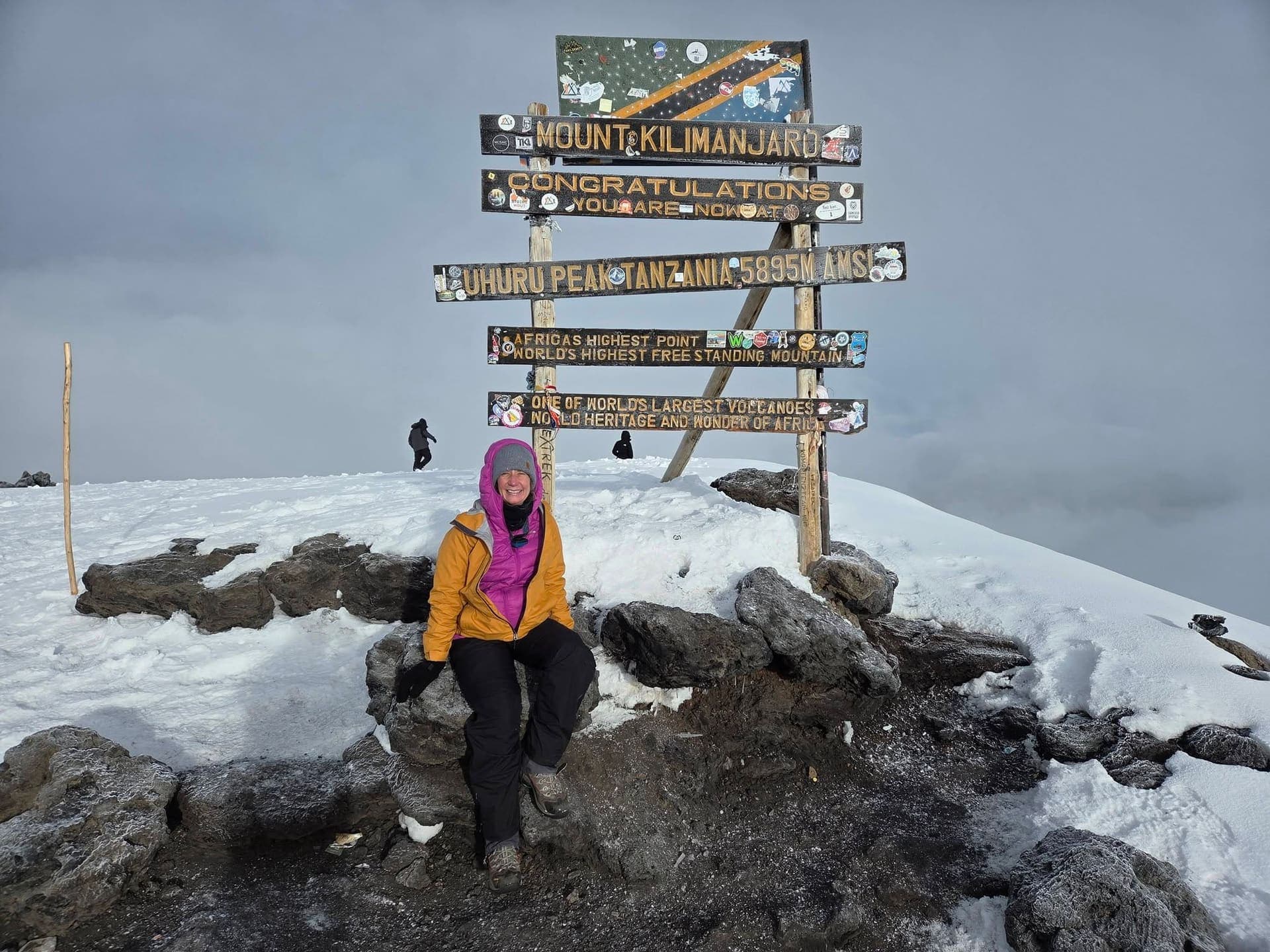
Summit day begins during the night, usually around midnight, after a short rest at Kibo Hut. You will dress in warm, layered clothing, switch on your headlamp and begin the slow ascent with your mountain guide. This is generally the most physically demanding part of the entire expedition because the trail climbs steeply at high altitude, where oxygen availability is significantly lower than at sea level.
The route climbs towards Gilman's Point on the crater rim, at approximately 5,685 metres. The trail is steep and can include loose volcanic scree, cold conditions and challenging footing. Your guide will set a very slow, controlled pace and monitor how you are coping with the altitude and physical demands.
The summit attempt requires determination, patience and careful management of energy. You should focus on small, steady steps, breathing comfortably and following the guide's instructions. The temperature may be well below freezing, and wind, snow or ice can affect the conditions. Appropriate thermal clothing, gloves, head protection and suitable footwear are essential.
After reaching Gilman's Point, climbers who remain well and whose guides consider it safe will continue along the crater rim towards Uhuru Peak, the highest point on Mount Kilimanjaro at 5,895 metres. The final section can still be demanding, but the landscape and the prospect of reaching the roof of Africa make it an extraordinary experience.
At Uhuru Peak, you will have time for summit photographs and to appreciate the achievement, provided conditions allow. Your guide will manage the time at the summit according to the weather, your condition and safety considerations. Reaching the summit is a major accomplishment, but remaining healthy and descending safely are always more important than continuing when unwell.
After the summit visit, you will descend carefully back towards Kibo Hut, where you can rest and have refreshments before continuing down to Horombo Hut. The descent is long and can be tiring after the overnight climb, so it is important to maintain concentration, use appropriate walking techniques and follow the guide's instructions.
You will arrive at Horombo Hut later in the day, where the mountain crew will arrange dinner and a well-deserved rest. This is likely to be the longest day of the expedition, and it is important to understand that the timetable can change with weather, trail conditions, altitude symptoms and the group's progress.
The midnight summit ascent, Gilman's Point, the final push towards Uhuru Peak when safe, and the long descent to Horombo Hut.
Important safety note: If you develop symptoms of altitude illness, become excessively exhausted or experience unsafe conditions, your guide may stop the ascent and arrange descent. Summit success is never guaranteed, and a climber may turn around before Uhuru Peak for safety reasons.- Overnight:
- Horombo Hut
- Meals:
- Tea or a light snack before departure, refreshments and dinner
- 5
Day 5
Horombo Hut to Marangu Gate – Return to Arusha
3,720 m → 1,870 m20 km5–7 hoursAfter breakfast at Horombo Hut, you will begin the final descent towards Marangu Gate. Although the summit attempt is behind you, the descent is still a substantial hike, and your legs may feel tired after the long previous day. Your guide will encourage a careful, steady pace and remind you to watch your footing, particularly on uneven or damp sections of the trail.
As you descend, you will pass through the open moorland and heath before returning to the lush rainforest zone. The changing scenery provides a final opportunity to appreciate the mountain's diverse ecosystems, from the high-altitude landscape near Horombo to the richer vegetation at lower elevations.
You will take appropriate breaks along the way, and lunch will be arranged according to the planned schedule. Once you reach Marangu Gate, your team will complete the necessary exit formalities. Successful summit climbers will receive the relevant Kilimanjaro National Park summit certificate according to park procedures and the highest point officially reached.
After leaving the park, your driver will transfer you to your hotel in Arusha or Moshi, as agreed in your booking. A hot shower, a comfortable bed and a relaxed evening are welcome rewards after five days on the mountain.
If you have an international flight on the same day, we strongly recommend discussing the timing with us in advance. A separate overnight stay after the climb is often a more comfortable option and can provide a sensible buffer in case the descent takes longer than expected.
A long descent through Kilimanjaro's forest and moorland zones, completion of the park formalities and transfer to your agreed town or hotel.
- Overnight:
- Transfer to your hotel in Arusha or Moshi
- Meals:
- Breakfast and lunch
What's included in the price
- Kilimanjaro National Park fees: The applicable park entry fees for the five-day itinerary, together with the relevant compulsory conservation and mountain-use charges specified in your quotation.
- Mountain hut accommodation: Four nights — Mandara Hut, Horombo Hut, Kibo Hut and Horombo Hut. Accommodation is generally in shared dormitory-style rooms; expect basic mountain facilities rather than hotel-style luxury.
- Professional mountain guides: Experienced local guides who coordinate the daily trekking schedule, explain the route, monitor the team's progress, watch for altitude-related symptoms and make safety decisions when conditions require a change of plan.
- Mountain support crew: The staff required for the confirmed group size — assistant guides, cooks and porters who transport approved expedition supplies and prepare meals, coordinated with appropriate workloads, suitable equipment and respect for their welfare.
- Meals during the climb: Breakfast, lunch and dinner according to the itinerary, eaten at the huts or as packed lunches. Tell us in advance about vegetarian diets, food allergies or other dietary requirements.
- Drinking water: Provided during the climb and made safe for drinking. Bring a reusable water bottle or hydration system with enough capacity for each trekking day.
- Transfers for the expedition: Between your hotel in Moshi or Arusha and Marangu Gate at the start of the climb, and the return transfer after the trek.
- Safety briefing and mountain preparation: Before the trek your guide explains the route, walking times, conditions, equipment and the importance of reporting symptoms early, and monitors your condition throughout.
- Rescue and emergency arrangements: The applicable park rescue arrangements and mountain emergency support. This does not automatically include helicopter evacuation, hospital treatment or international medical evacuation — you need travel insurance that covers high-altitude trekking on Kilimanjaro.
- Summit certificate: Recorded through the applicable park procedures if you reach the qualifying summit point.
What's not included
- International flights: Flights to and from Tanzania.
- Accommodation before and after the climb: Hotel nights in Arusha or Moshi before or after the mountain expedition (can be added).
- Airport transfers: Transfers between Kilimanjaro International Airport and your hotel, unless specifically included.
- Tanzania visa fees: Visa applications and related immigration charges.
- Travel and medical insurance: Insurance covering high-altitude trekking, medical expenses, emergency evacuation, trip cancellation and other relevant risks.
- Personal climbing equipment: Hiking boots, waterproof jackets and trousers, thermal layers, gloves, sleeping bag, headlamp, trekking poles, backpack and other personal gear unless rental is agreed.
- Tips and gratuities: Tips for guides, assistant guides, cooks and porters — budget about $250–$350 per climber for the whole climb.
- Personal expenses: Laundry, telephone charges, souvenirs, snacks and other personal purchases.
- Additional meals and drinks: Meals outside the stated itinerary and any beverages or special food not included in the package.
- Optional services: Equipment rental, private upgrades, additional accommodation and other services not specified in the quotation.
- Medical treatment and uncovered evacuation costs: Hospital treatment, specialist care, helicopter evacuation and other expenses not covered by the confirmed package or your insurance.
- Additional costs arising from itinerary changes: Extra accommodation, transport or other expenses resulting from voluntary changes or circumstances outside the agreed arrangements.
Is the 5-Day Marangu Route right for you?
The five-day Marangu Route is best suited to travellers who are physically fit, have prepared for several consecutive days of hiking and understand the challenges of sleeping and walking at altitude. The hut accommodation is convenient, but it does not remove the physical demands of the mountain or the risk of altitude sickness.
If your priority is to maximise your time for acclimatisation and give your body more opportunity to adjust to the altitude, we recommend considering the six-day Marangu Route. It adds a further night around Horombo Hut and an acclimatisation day, making the schedule less compressed.
Physical fitness is important, but it cannot predict exactly how your body will respond to altitude. A well-prepared climber can still experience altitude illness, while a slower pace, appropriate acclimatisation and early reporting of symptoms can help the guide make safer decisions.
Our team will explain the route, preparation requirements, equipment list and safety procedures before your climb so that you can make an informed decision about the itinerary that best suits your experience and goals.
Essential equipment for the Marangu Route
Proper equipment is essential because Kilimanjaro's temperature and weather conditions can change significantly between the rainforest and the summit. Your personal packing list should include:
- Waterproof hiking boots that have been properly broken in.
- Moisture-wicking base layers and warm insulating clothing.
- A waterproof and wind-resistant outer jacket and trousers.
- Warm gloves, a hat and a neck covering or buff.
- A warm sleeping bag suitable for sub-zero mountain conditions.
- A headlamp with spare batteries for the night-time summit ascent.
- Trekking poles to help with balance and the long descent.
- A reusable water bottle or hydration system.
- Sunglasses, sunscreen and lip protection.
- A daypack for water, clothing layers, snacks and personal essentials.
- Personal medication and any other items recommended by your healthcare professional.
Climb Kilimanjaro with Trust Tours & Safaris
Standing at Uhuru Peak is an extraordinary goal, but a successful expedition is about more than reaching the summit. It is about preparing well, respecting the mountain, working with a professional local team and making sensible decisions throughout the journey.
Trust Tours & Safaris provides locally organised Kilimanjaro expeditions with experienced mountain guides, organised support crews and personal assistance before your climb. We want you to understand the challenges, know what is included in your package and feel supported from the first briefing to your return from the mountain.
Contact us to request your personalised quotation for the five-day Marangu Route, or ask our team about the six-day option if you would prefer additional time for acclimatisation. Your Kilimanjaro adventure starts with the right preparation. Let's plan it together.
- WhatsApp: +255 785 938 860
- Email: info@trusttourstz.com
- Website: trusttourstz.com
Frequently Asked Questions
Still have questions? Ask Ombeni directly on WhatsApp.
The same route, another length
More days on the mountain mean more time to acclimatise and a better chance of reaching the summit; fewer days suit fit climbers with less time.
Compare every Kilimanjaro climb
Prices per person in US dollars. Open any climb for its full itinerary and price table, or see all routes side by side.
| Climb | On the mountain | Difficulty | 1 person | Groups from |
|---|---|---|---|---|
| 5-Day Marangu (this climb) | 5 days | Challenging | $2,850 | $1,999 |
| 6-Day Marangu | 6 days | Moderate | $2,627 | $1,950 |
| 6-Day Machame | 6 days | Challenging | $3,250 | $2,250 |
| 6-Day Rongai | 6 days | Moderate | $3,250 | $2,300 |
| 6-Day Umbwe | 6 days | Tough | $3,250 | $1,990 |
| 7-Day Machame | 7 days | Challenging | $3,233 | $2,350 |
| 7-Day Lemosho | 7 days | Challenging | $3,250 | $2,450 |
| 8-Day Lemosho | 8 days | Challenging | $3,850 | $2,550 |
| 9-Day Northern Circuit | 9 days | Challenging | $4,550 | $2,850 |
| 11-Day Northern Circuit + Crater Camp | 11 days | Tough | $6,250 | $3,590 |
Read before you go
Free, no-fluff guides from the people who run the trips.
How Long Does It Take to Climb Kilimanjaro?
Five to nine days — and why the longer routes reach the summit far more often.
Read guide →Kilimanjaro · 12 min readClimbing Kilimanjaro: The Complete Guide
Everything that actually decides whether you stand on the Roof of Africa — routes, days, fitness, altitude, cost and timing — in one honest read.
Read guide →Kilimanjaro · 9 min readClimbing Kilimanjaro for Beginners
Can a beginner climb Kilimanjaro? Yes — most reasonably fit first-timers can, with the right route, some training and a slow pace. An honest first-timer's guide.
Read guide →Ready to climb?
Plan your 5-Day Marangu with Ombeni
Per person in US dollars. The 2-person rate assumes two climbers sharing a hotel room; the solo rate carries the full cost of a private expedition. Final price confirmed in your written quote.
1 person
$2,850
per person