The short answer
Pack Kilimanjaro in layers, because you'll cross five climate zones from humid rainforest to an arctic summit. The essentials: a warm insulated jacket and sleeping bag for summit night, a waterproof shell, broken-in boots, sun protection, and a head-torch. Bring less of everything else — porters carry your duffel, but loads are limited and fair.
The trick to packing for Kilimanjaro is realising you're packing for several climates at once. You'll start in warm, humid rainforest and finish on a freezing, wind-blasted summit, so the whole system is about layers you can add and shed. Here's what you actually need — and what you can leave at home.
See our Kilimanjaro climbs →Pack for five climates
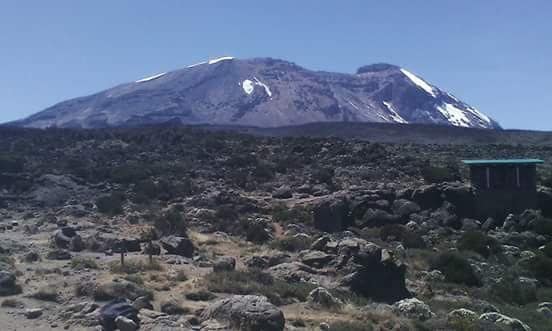
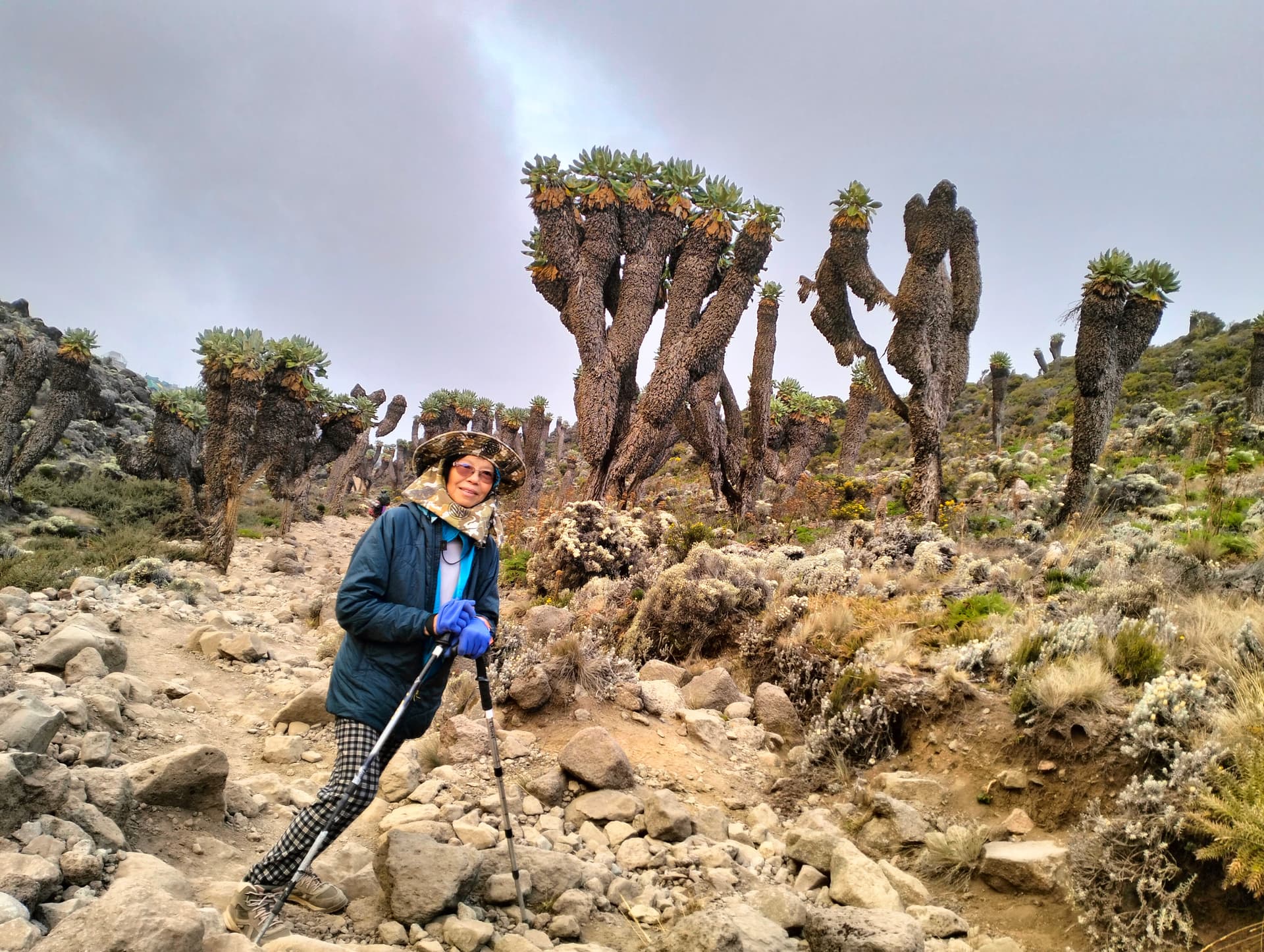
Over the climb you'll pass through five ecological zones, each colder and thinner than the last. That's why layering beats any single 'warm coat' — you'll be peeling layers off in the forest and piling every one back on for summit night. Our complete guide to climbing Kilimanjaro explains how the zones work; how cold it gets depends on when you go, covered in the best time to climb.
Over a few days you walk from farmland and rainforest, through alpine moorland and high-altitude desert, to an arctic summit — climates that would take a continent's worth of latitude to cross at sea level.
The layering system
- ›Base layers — moisture-wicking tops and bottoms (not cotton)
- ›Mid layers — fleece or light down for warmth
- ›Insulated jacket — a proper warm down/synthetic jacket for summit night
- ›Waterproof shell — breathable jacket and over-trousers for rain and wind
- ›Hiking trousers and shorts/convertibles for the lower, warmer days
Footwear and the summit-night kit
- ›Well-broken-in waterproof hiking boots (never brand-new)
- ›Several pairs of wool/synthetic hiking socks
- ›Warm hat, buff/neck gaiter, and insulated gloves plus liner gloves
- ›Head-torch with spare batteries — essential for the midnight summit start
- ›Insulated, season-appropriate sleeping bag (rated for well below freezing)
Important
Two things make or break summit night: a genuinely warm insulated jacket and a cold-rated sleeping bag. Don't under-spec these — the summit is below freezing every month of the year.
Day pack, health and extras
- ›A 25–35 L daypack for what you carry each day (water, layers, snacks, camera)
- ›Hydration bladder and/or bottles — aim for plenty of water capacity
- ›High-SPF sunscreen, SPF lip balm and good sunglasses — UV is fierce at altitude
- ›Personal first-aid kit, any prescribed altitude medication, and toiletries
- ›Trekking poles (a real help on the long, knee-jarring descents)
- ›Snacks you love, wet wipes, and a power bank for devices
What porters carry — and packing smart
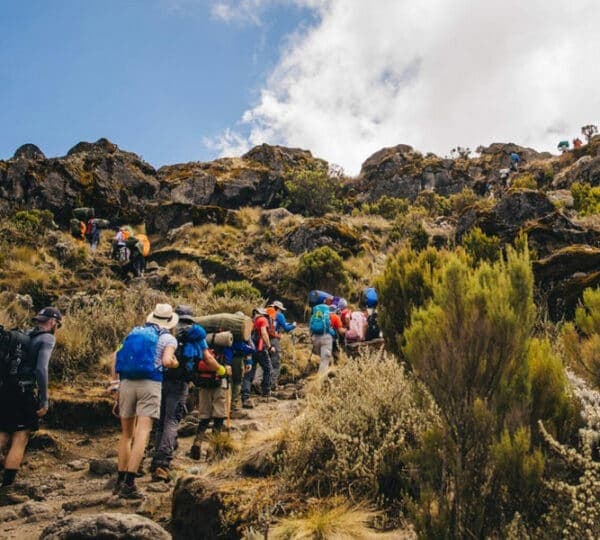
Your main bag is carried by a porter in a duffel, while you walk with just your daypack — but porter loads are weight-limited for their welfare, so pack disciplined and light. A common limit is around 15 kg for your duffel; check the exact figure with us before you fly. Fair porter treatment is one of the things a properly priced climb pays for — see what a Kilimanjaro climb actually costs.
We'll send you a full, personalised checklist once you book, and we can advise on what to rent in Arusha versus bring from home so you don't over-buy. Still choosing? Compare all our Kilimanjaro routes and prices, and train for the load with our Kilimanjaro fitness guide.
Good to know
You don't have to own everything. Bulky items like down jackets, sleeping bags and poles can be rented locally in good condition — ask us and we'll arrange it.
Frequently Asked Questions
Ready to take the next step?
See our Kilimanjaro climbs →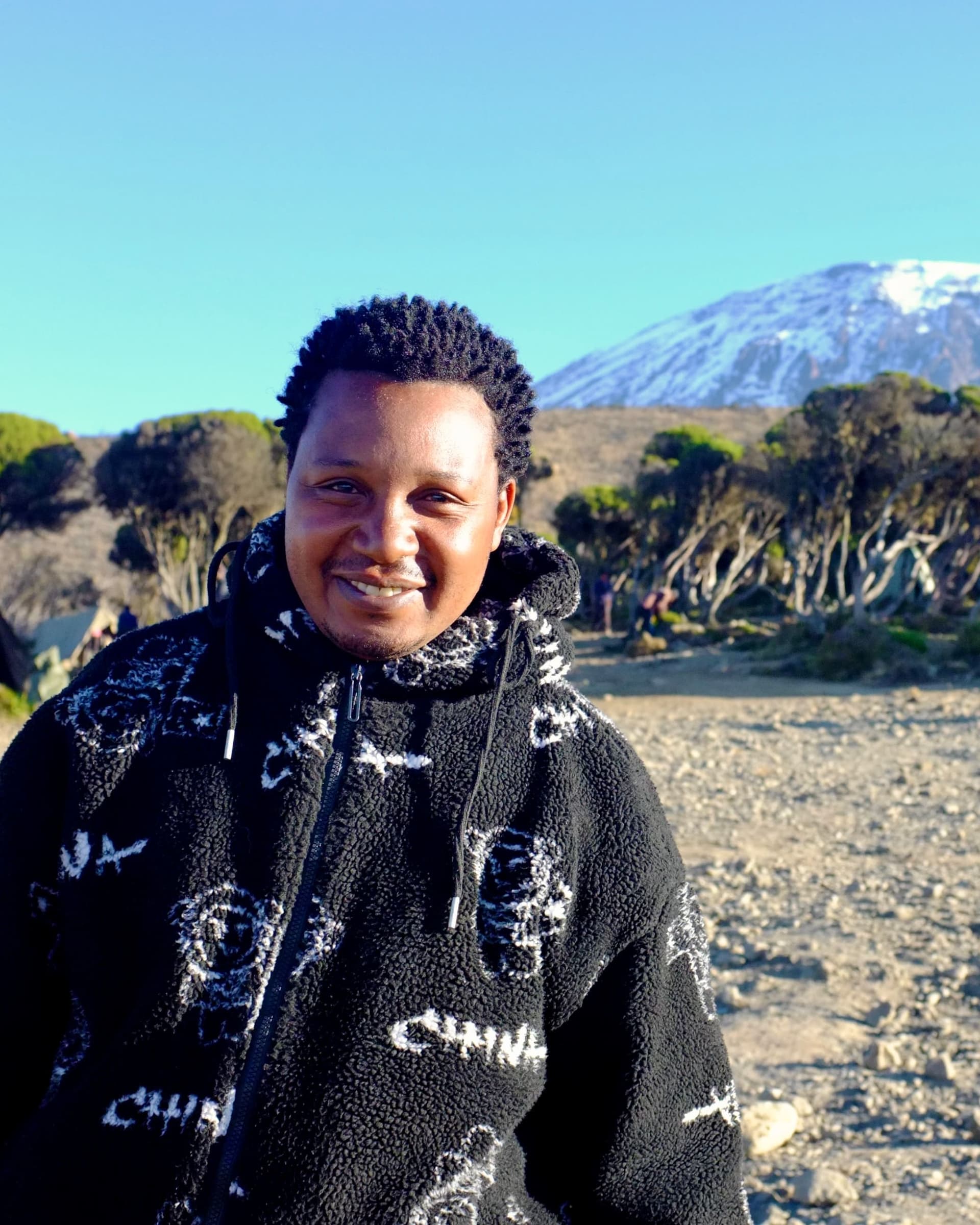
Written by
Ombeni — Founder & Lead Guide
Ombeni founded Trust Tours & Safaris in Arusha in 2008 and has personally guided hundreds of Kilimanjaro climbs and Tanzania safaris. TALA-licensed Tourism Agent (Class A). More about Ombeni →