The short answer
A properly run Kilimanjaro climb costs roughly $2,000–$3,600 per person depending on route and party size, and ours start from $1,950. The biggest single line item is national park fees — around $873 on a 6-day Marangu and about $1,097 on an 8-day Lemosho, per person, before anything else is paid for. Those fees are identical for every operator, which is why a $1,200 'all-inclusive' climb is mathematically impossible to run safely: after park fees there is almost nothing left for crew wages, food and safety.
Kilimanjaro is one of those trips where the cheapest quote is rarely the best decision. A large share of the cost is fixed by the national park and by the simple economics of supporting you on a high mountain for a week, so when a price looks too good to be true, the savings are coming from somewhere — usually the parts you can't see until you're already up there. Below we've itemised every major cost, including the park fees most operators never show you. If you're choosing a route first, see our Kilimanjaro routes comparison.
See our Kilimanjaro climbs & prices →The short answer: what our climbs cost
Here are our current 'from' prices per person, all-inclusive of park fees, licensed guides, full crew, camping equipment, all mountain meals and airport transfers. They exclude flights, visa, insurance, personal gear and crew tips.
| Climb | Days | Solo | 2 climbers | 8+ climbers |
|---|---|---|---|---|
| Marangu | 6 | $2,627 | $2,240 | $1,950 |
| Rongai | 6 | $2,747 | $2,360 | $2,070 |
| Umbwe | 6 | $2,847 | $2,420 | $2,100 |
| Machame | 7 | $3,233 | $2,700 | $2,300 |
| Lemosho | 8 | $3,623 | $3,050 | $2,620 |
| Northern Circuit | 9 | $2,946 | $2,497 | $2,160 |
Park fees: the cost nobody can discount
This is the number most operators never show you. Kilimanjaro National Park charges every climber a set of per-day and per-night fees, plus 18% VAT. They are identical whether you book the cheapest operator on the internet or the most expensive — nobody gets a discount.
| Fee | Approximate rate |
|---|---|
| Conservation (entry) fee | $70 per person, per day |
| Camping fee | $50 per person, per night |
| Hut fee (Marangu only) | $60 per person, per night |
| Rescue fee | $20 per person, per climb |
| Crew park entry | ~$2 per crew member, per day |
| VAT | 18% on top of park fees |
What the park alone charges, by route
Applying those rates gives you the fixed floor under every quote you'll receive. These figures are per climber, including VAT, and exclude your crew's own park entry fees.
| Climb | Park days / nights | Approx. park fees |
|---|---|---|
| 6-day Marangu (huts) | 6 days / 5 nights | ~$873 |
| 6-day Rongai | 6 days / 5 nights | ~$791 |
| 7-day Machame | 7 days / 6 nights | ~$956 |
| 8-day Lemosho | 8 days / 7 nights | ~$1,097 |
| 9-day Northern Circuit | 9 days / 8 nights | ~$1,239 |
Good to know
Read that again: on our $2,240 Marangu climb for a pair, roughly $873 — nearly 40% of the price — goes straight to the national park before a single guide, meal or tent is paid for.
Where the rest of your money goes
Here's an approximate breakdown for one climber on our 7-day Machame at $2,700, in a group of two. A typical two-climber team needs around nine crew: a lead guide, an assistant guide, a cook and six porters carrying tents, food, water and equipment.
| Cost | Approx. | Share |
|---|---|---|
| Park fees (incl. VAT) | ~$956 | 35% |
| Crew wages + crew park entry | ~$550 | 20% |
| Food & equipment | ~$320 | 12% |
| Transport, transfers & logistics | ~$200 | 7% |
| Office, insurance, licensing & margin | ~$674 | 25% |
Got a question while you read? Ombeni answers personally — usually within a few hours.
See our Kilimanjaro climbs & prices →Why a $1,200 climb is dangerous, in one calculation
Take a $1,200 'all-inclusive' 7-day Machame quote. Park fees alone are about $956. That leaves roughly $244 to pay a nine-person crew for seven days, feed you and them three meals a day, provide tents and safety equipment, and run the transfers and office — before any profit.
It cannot be done honestly. The money comes out of the only place it can: porters' wages and loads, food quality, guide experience, and the safety margin — oxygen, health checks, and the willingness to turn a paying client around. Those are exactly the things you need most at 5,000 m. A cheap climb isn't a bargain; it's a transfer of risk from the operator's margin onto you and the crew.
Important
If a quote is far below the park-fee floor plus fair crew wages, ask the operator to itemise it. An honest operator will show you the numbers. We just did.
What's usually included — and what isn't
Our climb prices cover the things you need to get up and down safely. A few personal costs sit outside any operator's package and are worth budgeting for separately.
- ›Included: park fees, licensed guides, full porter and cook crew, camping equipment, all meals on the mountain, airport transfers and pre/post arrangements
- ›Usually extra: international flights, Tanzania visa, travel insurance, personal hiking gear, and tips for the crew
- ›Tips are a genuine and expected cost — budget for them on top of the climb price
Good to know
Tipping the crew is customary on Kilimanjaro and is not included in the climb price. We'll give you clear, fair guidance on amounts before you go so there are no awkward surprises at the gate.
Why very cheap is a red flag
Because so much of the cost is fixed, a price well below the market can only be reached by cutting things that matter: fewer days (hurting your odds and your safety), underpaying or overloading porters, skimping on food, or thinning out the safety margin. On a mountain where altitude is the main danger, those are exactly the wrong savings.
A fair price isn't about luxury — it's about a climb that's run safely and treats its crew properly. That's the standard we hold ourselves to.
| Done properly | Suspiciously cheap | |
|---|---|---|
| Days | 7+ for acclimatization | 5 to cut cost |
| Porters | Fair loads & wages | Overloaded, underpaid |
| Safety | Health checks, oxygen, evacuation plan | Little or none |
| Food | Hot, plentiful meals | Minimal |
How to lower the cost sensibly
The two biggest levers on your final price are the route you pick — compare them in which Kilimanjaro route to climb — and how many of you are climbing, since joining a group departure shares the fixed costs across more people.
Tell us your budget and dates and we'll show you the most cost-effective safe option — not just the cheapest number.
- ›Climb in a small group rather than solo — fixed costs are shared
- ›Travel in the quieter (wetter) shoulder months if you don't mind the weather
- ›Bring your own broken-in gear instead of renting everything
- ›Choose a route that fits your budget — but never cut days below a safe minimum
Frequently Asked Questions
Ready to take the next step?
See our Kilimanjaro climbs & prices →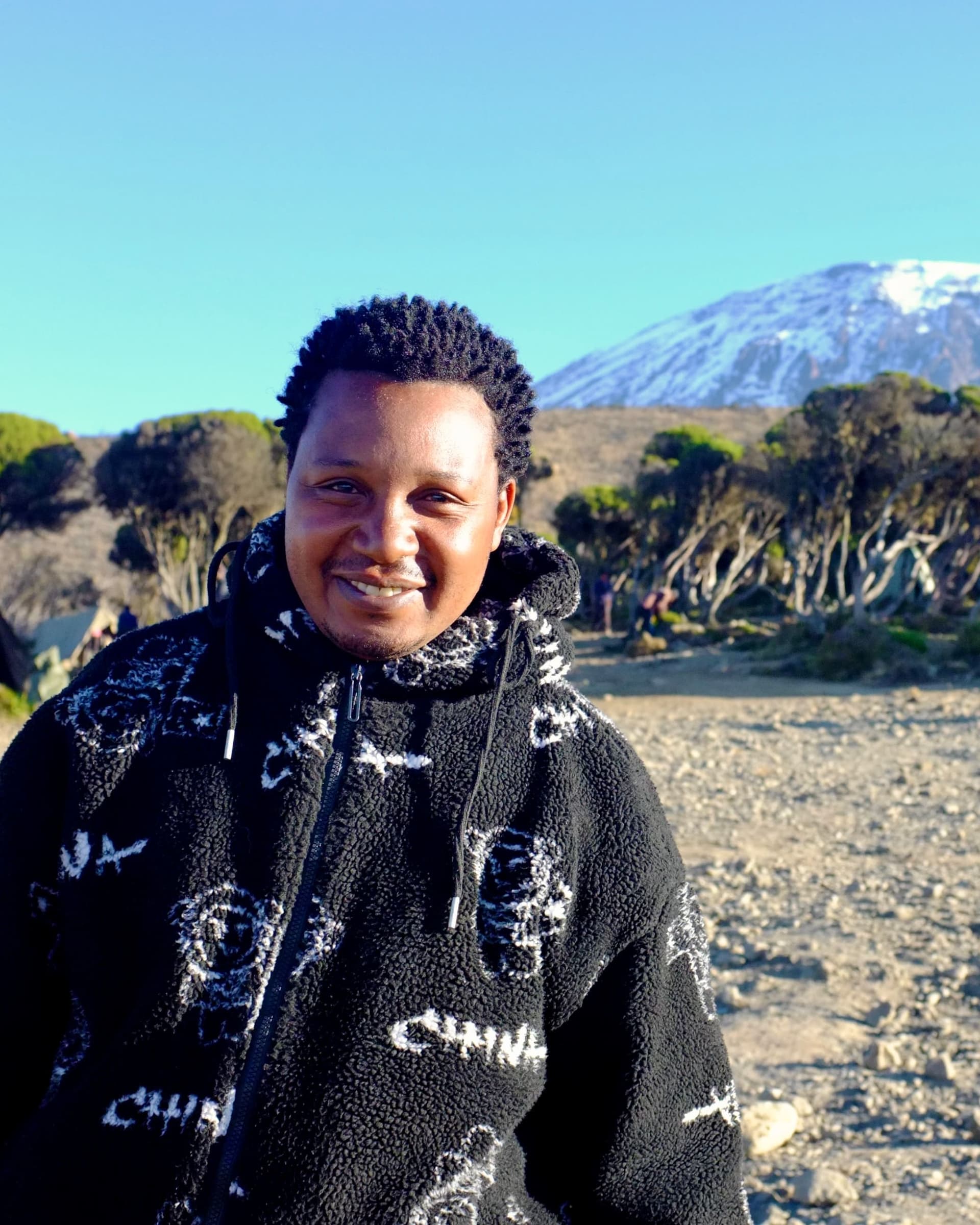
Written by
Ombeni — Founder & Lead Guide
Ombeni founded Trust Tours & Safaris in Arusha in 2008 and has personally guided hundreds of Kilimanjaro climbs and Tanzania safaris. TALA-licensed Tourism Agent (Class A). More about Ombeni →