The short answer
Mount Meru (4,566 m) is Tanzania's second-highest mountain and one of its finest treks — a 3-to-4-day climb through Arusha National Park, past giraffe and buffalo, to a dramatic knife-edge summit ridge. It's a wonderful objective on its own and an ideal acclimatization climb before Kilimanjaro.
Overshadowed by its giant neighbour, Mount Meru is one of Tanzania's best-kept secrets — a strikingly beautiful volcano that rewards climbers with wildlife on the lower slopes, a knife-edge summit ridge, and a sunrise view of Kilimanjaro floating above the clouds. Whether as a standalone adventure or a warm-up for Kili, here's why it deserves your attention.
View the 4-day Mount Meru climb →A climb through a national park
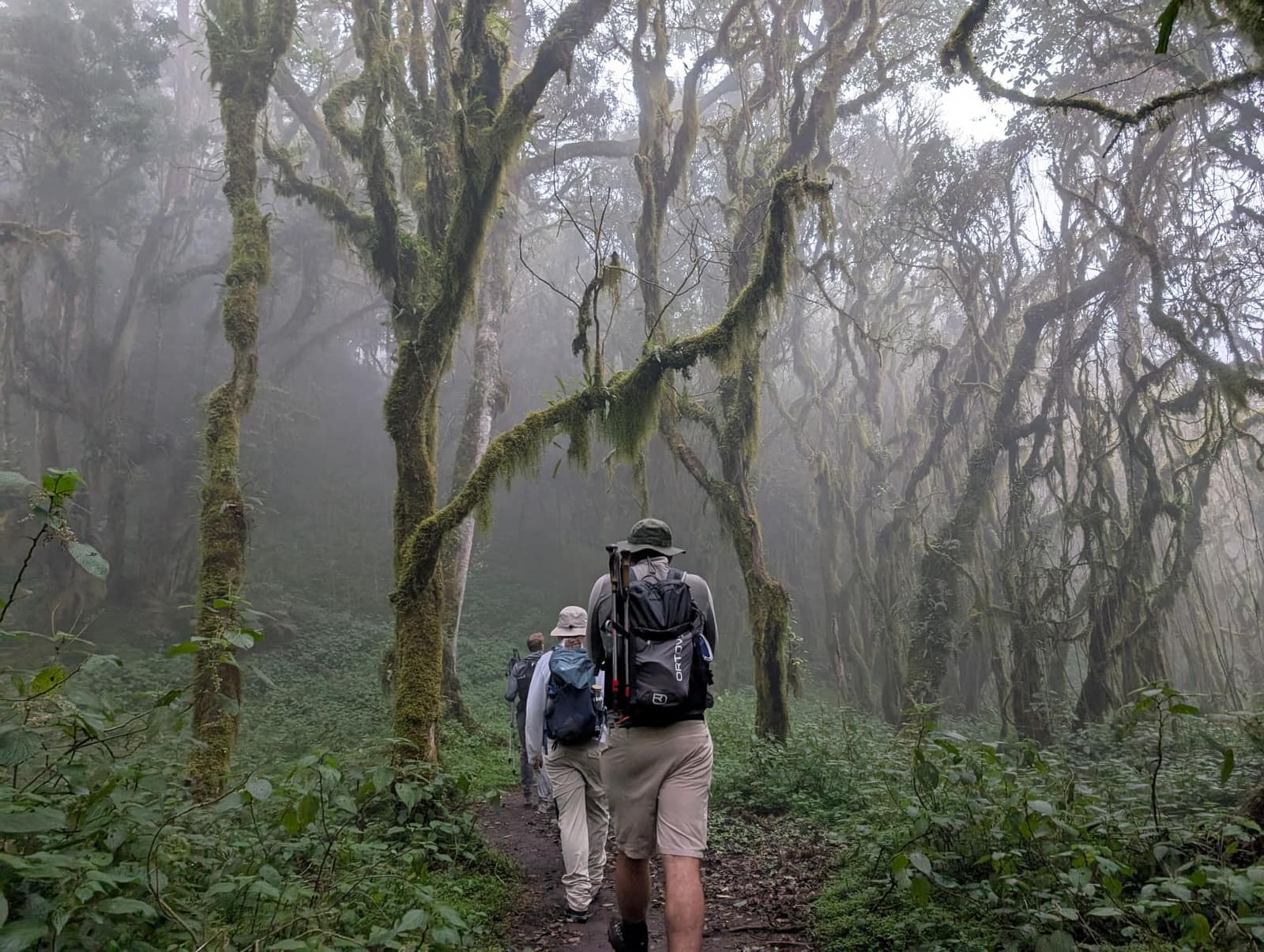
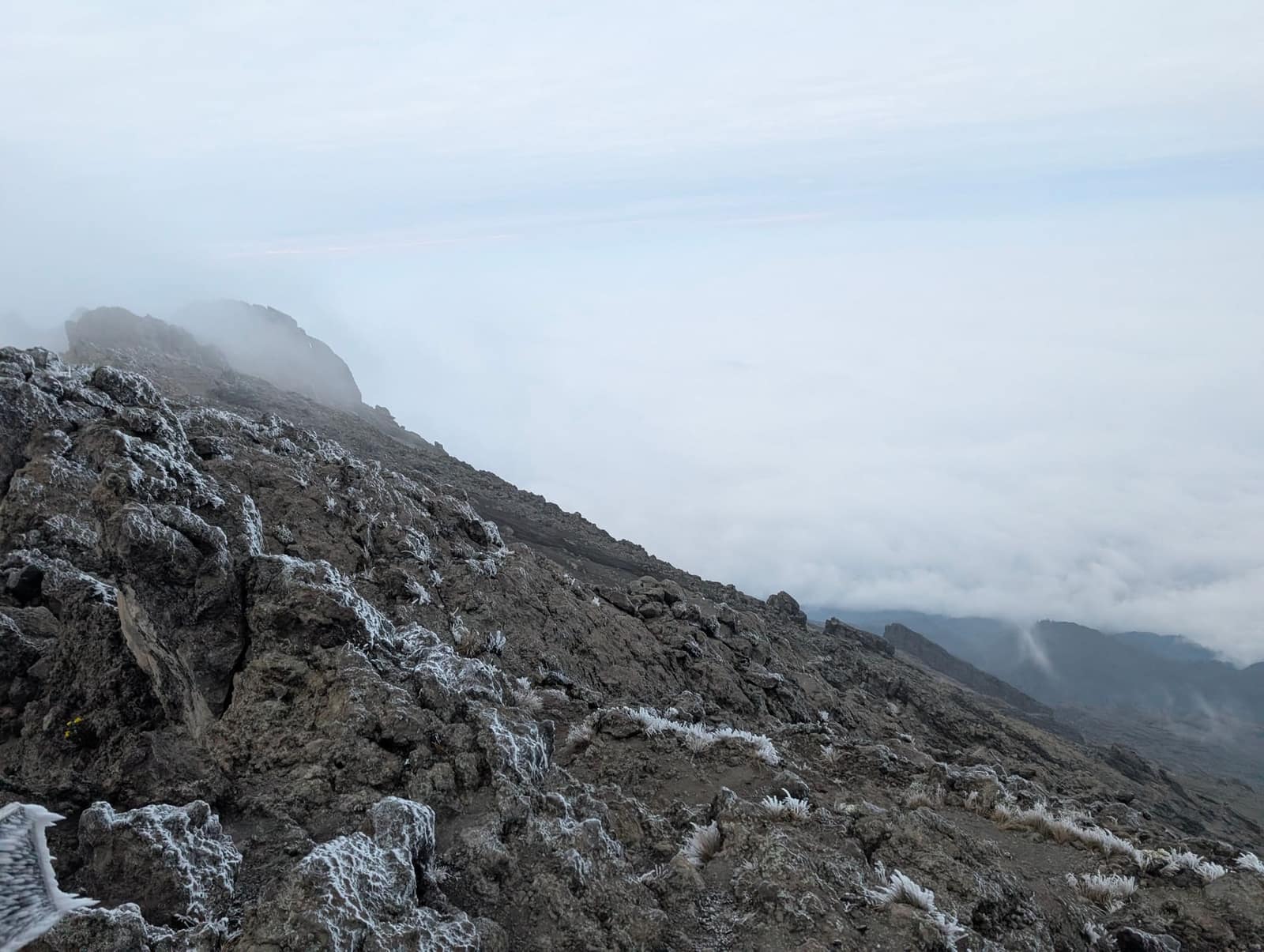
What sets Meru apart is that it rises through Arusha National Park, so the lower slopes are alive with wildlife. You walk — accompanied by an armed ranger — past giraffe, buffalo, warthog and colobus monkeys, something no other major trek in the region offers. The route climbs through forest and moorland to the crater rim and along an exhilarating ridge to Socialist Peak at 4,566 m.
The smart acclimatization warm-up
Meru's altitude makes it an excellent pre-acclimatization climb before Kilimanjaro. Summiting Meru a few days before you start Kili gives your body a real head start on adapting to thin air, which can meaningfully improve your Kilimanjaro summit chances. Leave a rest day or two in between so you arrive at Kili's gate adapted, not tired.
The trail repeatedly climbs to a high point, then drops to a lower camp to sleep. Each peak nudges your body to adapt; each lower night lets it recover — so the overall trend rises while you acclimatize.
Tip
Climbing Meru then Kilimanjaro is one of the best ways to boost your odds on the big mountain. Allow roughly two weeks for the pair, with rest days between.
Got a question while you read? Ombeni answers personally — usually within a few hours.
View the 4-day Mount Meru climb →The best time to climb Mount Meru
Meru can be climbed all year, but conditions change a lot from month to month. For most climbers, the best periods are June to October and January to February, with the best balance of trail conditions and clear summit views. Even then, prepare for cold, wind and the odd shower on summit night.
| Month | Typical conditions | For climbing |
|---|---|---|
| January | Generally dry, often clear views of Kilimanjaro | Excellent |
| February | Often dry, good visibility; pairs well with the Ndutu calving season | Excellent |
| March | Rain increasing, muddier trails | Variable |
| April | The long rains: slippery trails, limited views | Challenging |
| May | Wet, improving late in the month | Variable |
| June | The dry season begins; cold mornings and nights | Very good |
| July | Generally dry, cold summit night | Excellent |
| August | Usually dry, good visibility | Excellent |
| September | Generally dry, cold nights | Excellent |
| October | Usually dry; more cloud as the short rains approach | Very good |
| November | The short rains: showers, mist and slippery trails | Variable |
| December | Variable early, often drier later; popular for holiday trips | Good |
Good to know
These are typical seasonal patterns, not forecasts. Weather on Meru varies from year to year and changes quickly with altitude and time of day.
What to expect
- ›3–4 days on the mountain, sleeping in huts (not tents)
- ›An armed ranger accompanies you through the wildlife zones
- ›A pre-dawn summit push along a dramatic crater rim
- ›Sunrise views of Kilimanjaro across the plains
- ›Far fewer climbers than Kilimanjaro — often blissfully quiet
Frequently Asked Questions
Ready to take the next step?
View the 4-day Mount Meru climb →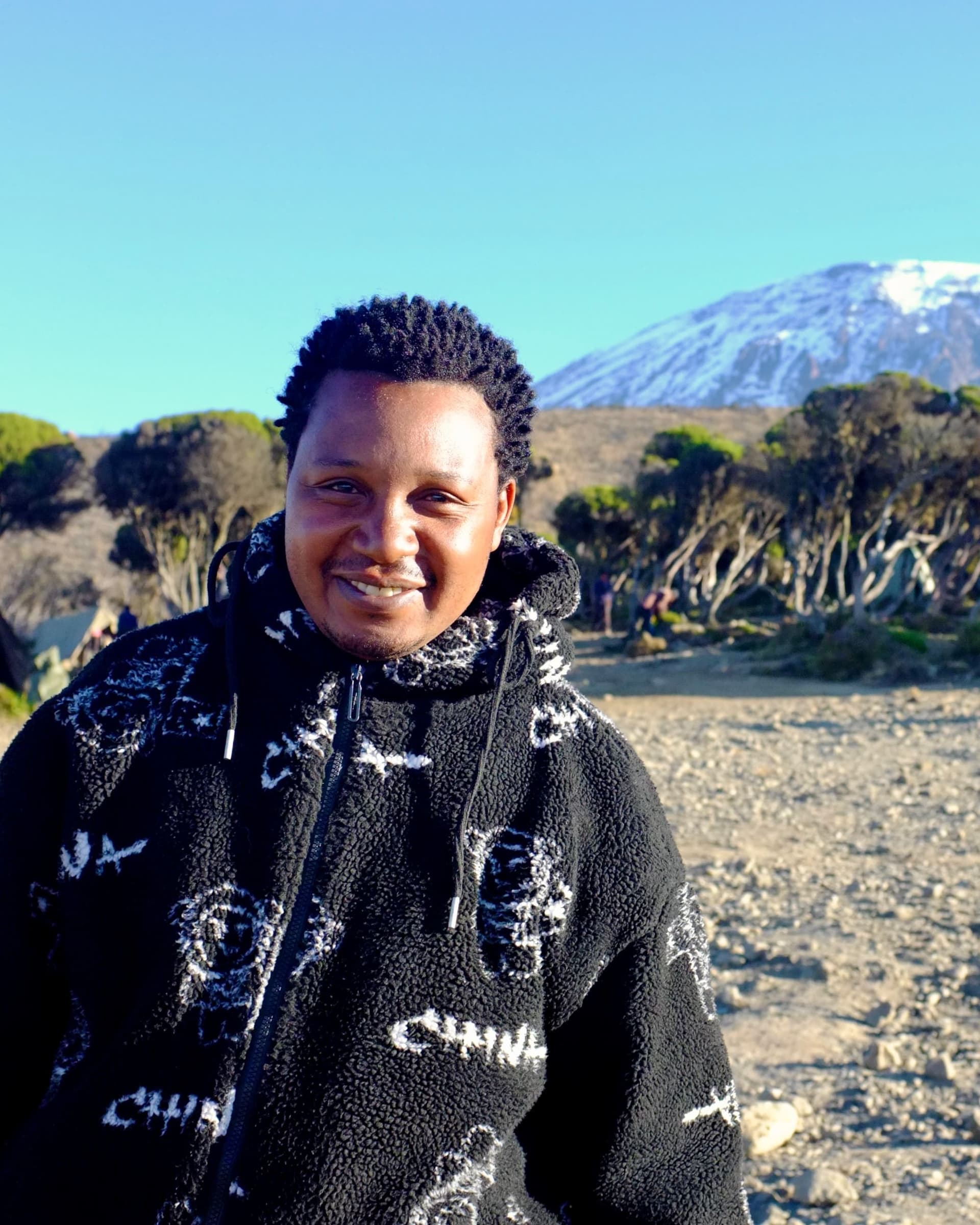
Written by
Ombeni — Founder & Lead Guide
Ombeni founded Trust Tours & Safaris in Arusha in 2008 and has personally guided hundreds of Kilimanjaro climbs and Tanzania safaris. TALA-licensed Tourism Agent (Class A). More about Ombeni →