9-Day Tanzania Private Safari – Great Migration, Ngorongoro & Serengeti

9-Day Safari · 4 comfort levels

9-Day Tanzania Private Safari – Great Migration, Ngorongoro & Serengeti

From

$4,095

per person

Indicative price per person for 2 adults sharing a private vehicle, at Mid-range level. Your written quote confirms the final price.

A varied, unhurried nine days: a walking safari and canoeing in Arusha National Park, Tarangire's elephants, the Ngorongoro Crater, the Ndutu plains and Central Serengeti's big cats.

This safari begins straight away, with no separate arrival day. You start in Arusha National Park, with a guided walking safari alongside an authorised armed ranger and a canoeing excursion beneath Mount Meru.

You then explore Tarangire National Park, famous for its elephant herds and magnificent baobabs, before descending into the Ngorongoro Crater, one of the most remarkable natural landscapes in Africa.

The journey continues to Ndutu and the Southern Serengeti, where you spend dedicated time searching for the migrating wildebeest and zebras. Several nights in Central Serengeti follow, an outstanding area for lions, leopards, cheetahs and elephants.

The aim is a safari that feels varied, unhurried and genuinely memorable, with enough time in the key wildlife areas rather than simply travelling from one place to the next.

Duration
9 days / 8 nights
Safari style
Private, with a dedicated professional driver-guide
Destinations
Arusha National Park · Tarangire · Ngorongoro · Ndutu · Central Serengeti
Start
Arusha
Finish
Flight from the Serengeti to Arusha
Special activities
Walking safari and canoeing in Arusha National Park

Highlights

  • Three ways to see wildlife: On foot with a ranger, from a canoe and by safari vehicle.
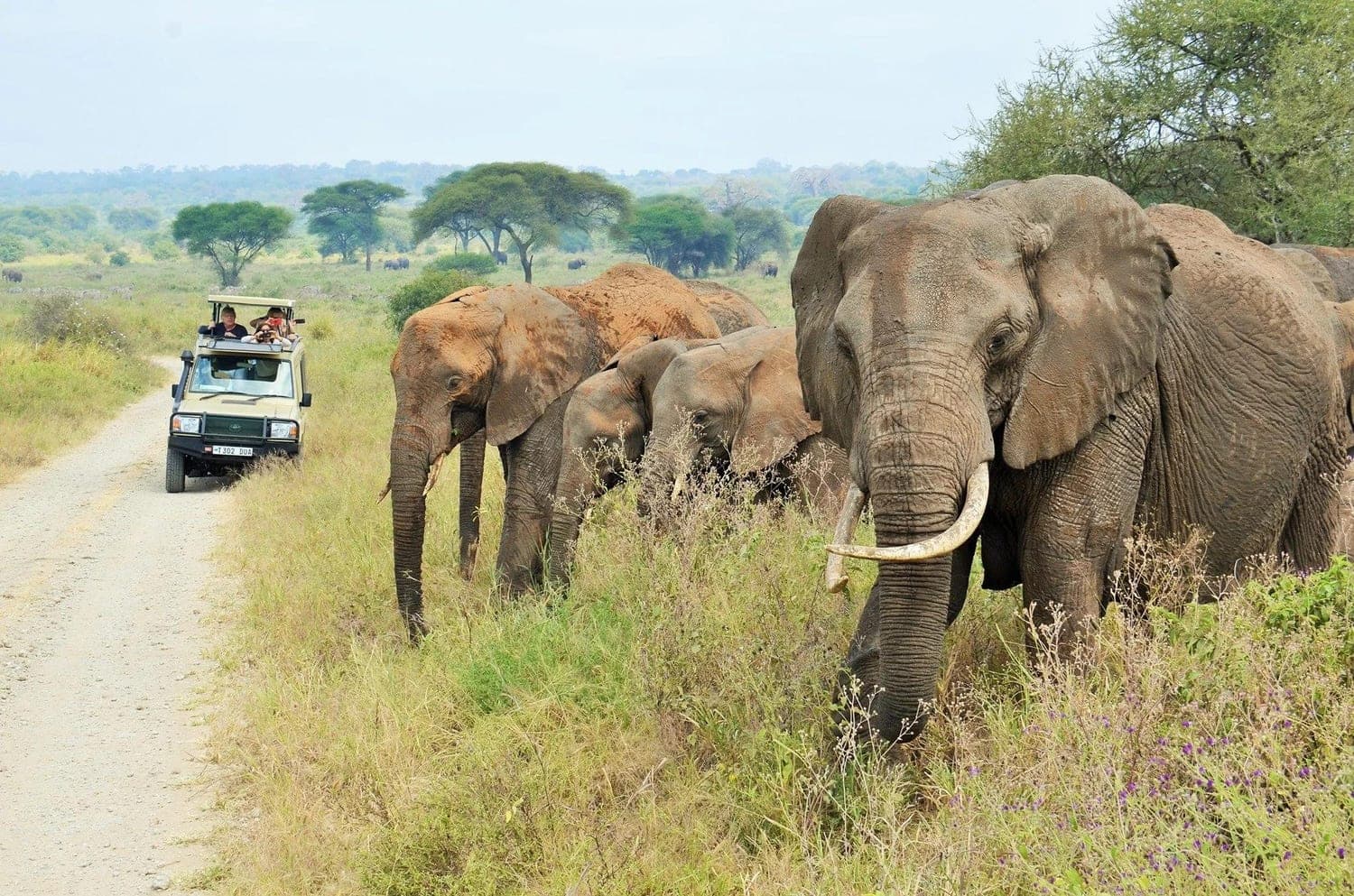
  • Tarangire: Elephant families among ancient baobabs.
  • Ngorongoro Crater: An extensive game drive on the crater floor.
  • Three nights at Ndutu: Two full days on the southern plains.
  • Three nights in Central Serengeti: Time for lions, leopards and cheetahs.
  • No long drive home: Fly from the Serengeti back to Arusha.

Best months to travel: Dec · Jan · Feb · Mar

Choose your comfort level

The route stays the same at every level. What changes is where you sleep, how you travel and how much is arranged for you.

Mid-range

From $4,095per person

$455–$555 per day · $4,095–$4,995 for 9 days

A comfortable, well-organised safari with excellent wildlife viewing and good value, without paying for extensive luxury services.

  • Comfortable 2–3-star lodges
  • Quality tented accommodation where appropriate
  • Private 4×4 safari vehicle
  • Professional safari guide
  • Full board
  • Park and conservation fees
  • Game drives
  • Airport transfers

Luxury

From $6,795per person

$755–$1,200 per day · $6,795–$10,800 for 9 days

Upgraded lodges and premium tented camps with stylish interiors, excellent dining and attentive hospitality, while the safari stays focused on wildlife.

  • Premium 4–5-star lodges and camps
  • Prime-location accommodation where available
  • Private 4×4 safari vehicle
  • One-way flight from the Serengeti to Arusha or Zanzibar
  • Highly experienced guide
  • Swimming pool at the lodge
  • Full board
  • Park and conservation fees
  • Private airport transfers
  • More flexibility around the daily schedule

High-end luxury

From $11,700per person

$1,300–$2,200 per day · $11,700–$19,800 for 9 days

Exceptional camps and lodges with premium suites, refined cuisine and personal service, chosen for location and exclusivity.

  • High-end luxury lodges and camps
  • Private luxury safari vehicle
  • Flights between the Serengeti and Arusha or Zanzibar, both ways
  • Highly experienced private guide
  • All-inclusive premium meals and service
  • Flexible game-drive schedule
  • Private airport transfers
  • Private swimming pool
  • Hot-air balloon safari
  • Emergency assistance during the safari, including helicopter evacuation
  • Priority accommodation selection where available

Ultra-premium

From $20,700per person

$2,300–$5,000 per day · $20,700–$45,000 for 9 days

Created for special celebrations and discerning travellers. Inclusions are tailored to the property and flights you choose, because not every camp offers every service.

  • Exceptional private suites or villas
  • The highest level of personal hospitality
  • Premium dining
  • Bespoke guiding arrangements
  • Private or charter-flight options

How the prices work

These are indicative private-safari planning ranges per person, based on 2 adults sharing one private safari vehicle and a room. They are not confirmed quotations.

Your final cost depends on your travel dates, the number of guests, camp availability, flight fares and the exact services you choose. Ndutu camps can fill early in the calving season, so we confirm your price and accommodation in writing before you pay a deposit.

To request a price for one traveller or a group of three to six, select your group size in the booking box and Ombeni will quote you directly.

Your private vehicle and guide are shared only by your own party, so the more of you there are, the less each person pays.

Day-by-Day Itinerary

  1. 1

    Day 1

    Arusha National Park: walking safari, wildlife and canoeing

    After breakfast, your guide drives you to Arusha National Park, a beautiful wilderness beneath Mount Meru. Unlike a safari spent entirely in a vehicle, today lets you experience the landscape on foot and from the water.

    In the morning, you enjoy a guided walking safari with an authorised armed park ranger. As you walk through forest and open areas, your ranger explains the plants, animal tracks, birdlife and wildlife behaviour.

    After lunch, you go to the Momella Lakes area for a canoeing excursion, subject to park arrangements and the weather. From the water, you can admire the peaceful scenery and watch waterbirds, with Mount Meru as a spectacular backdrop when the weather is clear.

    Later, you continue exploring the park by vehicle, then return to Arusha to relax and prepare for the safari ahead.

    Tanzania's wildlife on foot, from a canoe and by vehicle.

    Meals:
    Lunch and dinner
  2. 2

    Day 2

    Tarangire National Park: elephants, baobabs and savannah

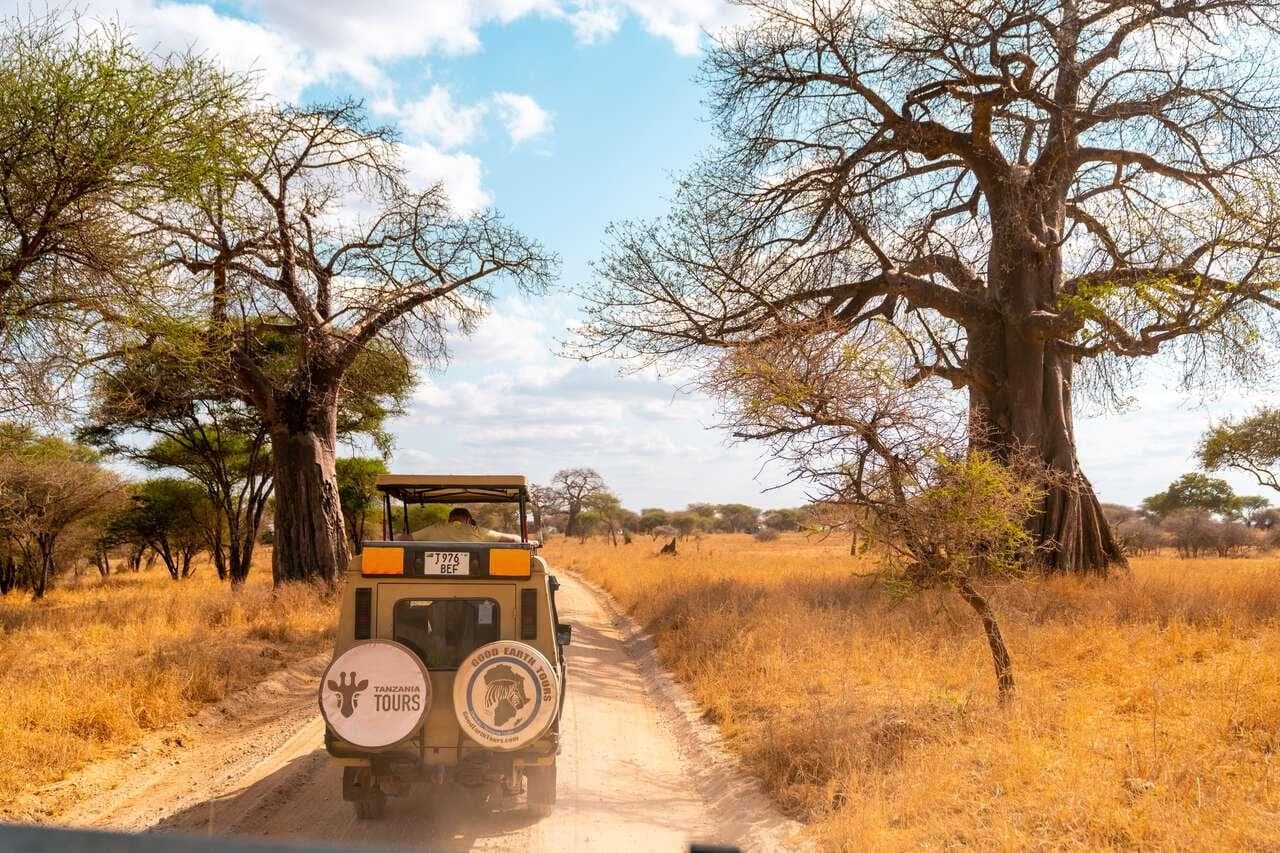
    A safari vehicle on a track between huge baobab trees in Tarangire National Park

    After breakfast, you leave Arusha for Tarangire National Park and a full day of wildlife exploring. Your guide follows wildlife-viewing tracks in search of elephants, giraffes, zebras, wildebeest, impalas and other animals. Tarangire is especially rewarding for watching elephant families feeding, moving between trees and gathering together.

    Around midday, you stop at a designated picnic site. In the afternoon, you continue through different parts of the park, among ancient baobabs, acacia woodland and open grassland.

    Late in the afternoon, you leave Tarangire and continue to Karatu to relax and prepare for the crater.

    A full day in one of Tanzania's most distinctive elephant habitats.

    Meals:
    Breakfast, picnic lunch and dinner
  3. 3

    Day 3

    Ngorongoro Crater, then on to Ndutu

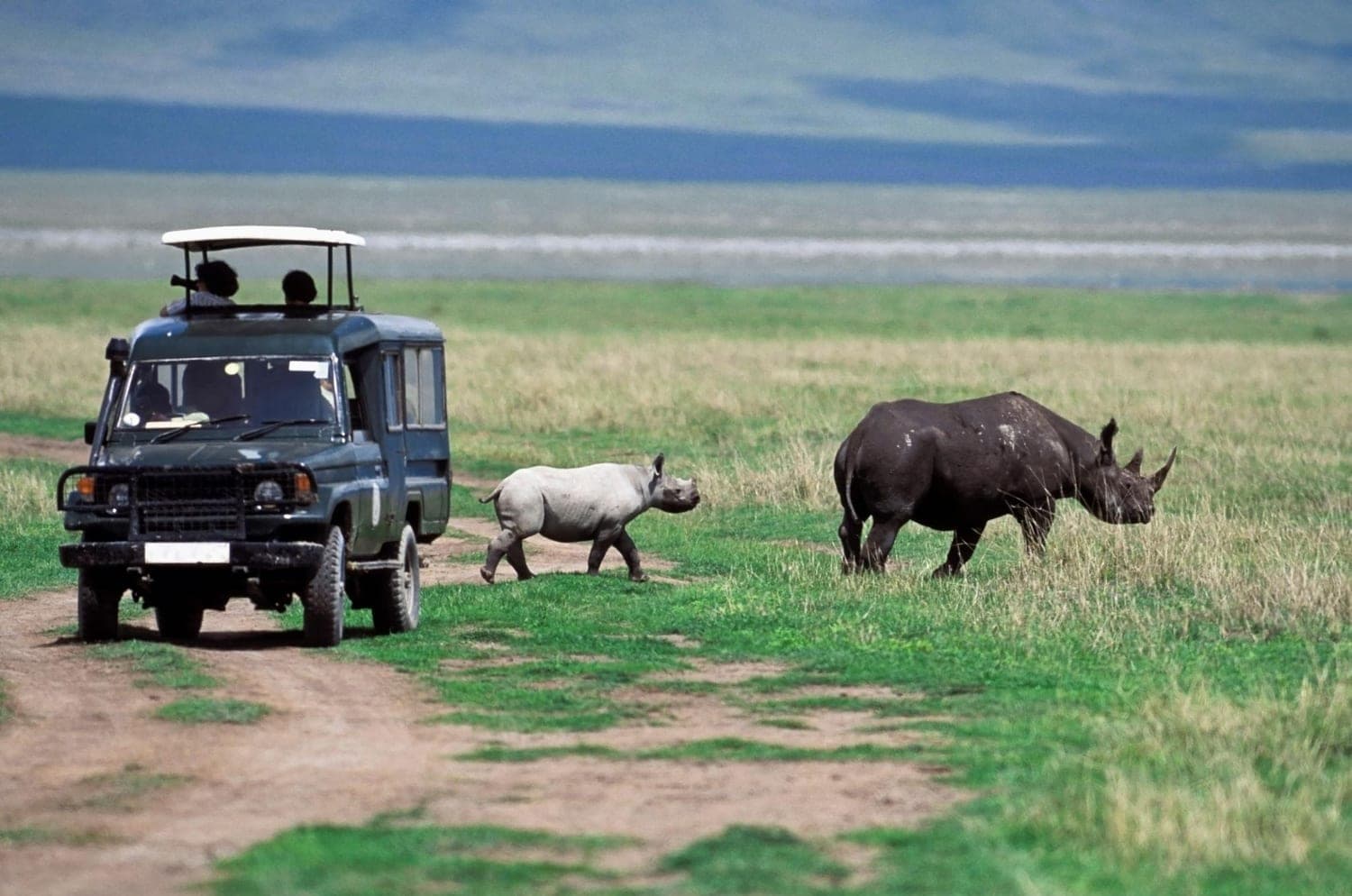
    A safari vehicle stopped near a black rhino and its calf

    After an early breakfast, you travel to the Ngorongoro Conservation Area. As you approach the crater rim, the scenery becomes increasingly dramatic, with sweeping views across the huge volcanic caldera.

    You descend for an extensive game drive through grassland, woodland and wetlands. Your guide will search for zebras, wildebeest, buffaloes, hippos and lions, while keeping an eye out for the endangered black rhino. You stop at a designated picnic area, and continue learning about the area's ecology and conservation.

    Afterwards, you climb to the rim and continue to Ndutu in the Southern Serengeti ecosystem, ready for the days of migration ahead.

    The crater's scenery and wildlife, then the southern plains.

    Meals:
    Breakfast, picnic lunch and dinner
  4. 4

    Day 4

    Ndutu and the Southern Serengeti: searching for the migration

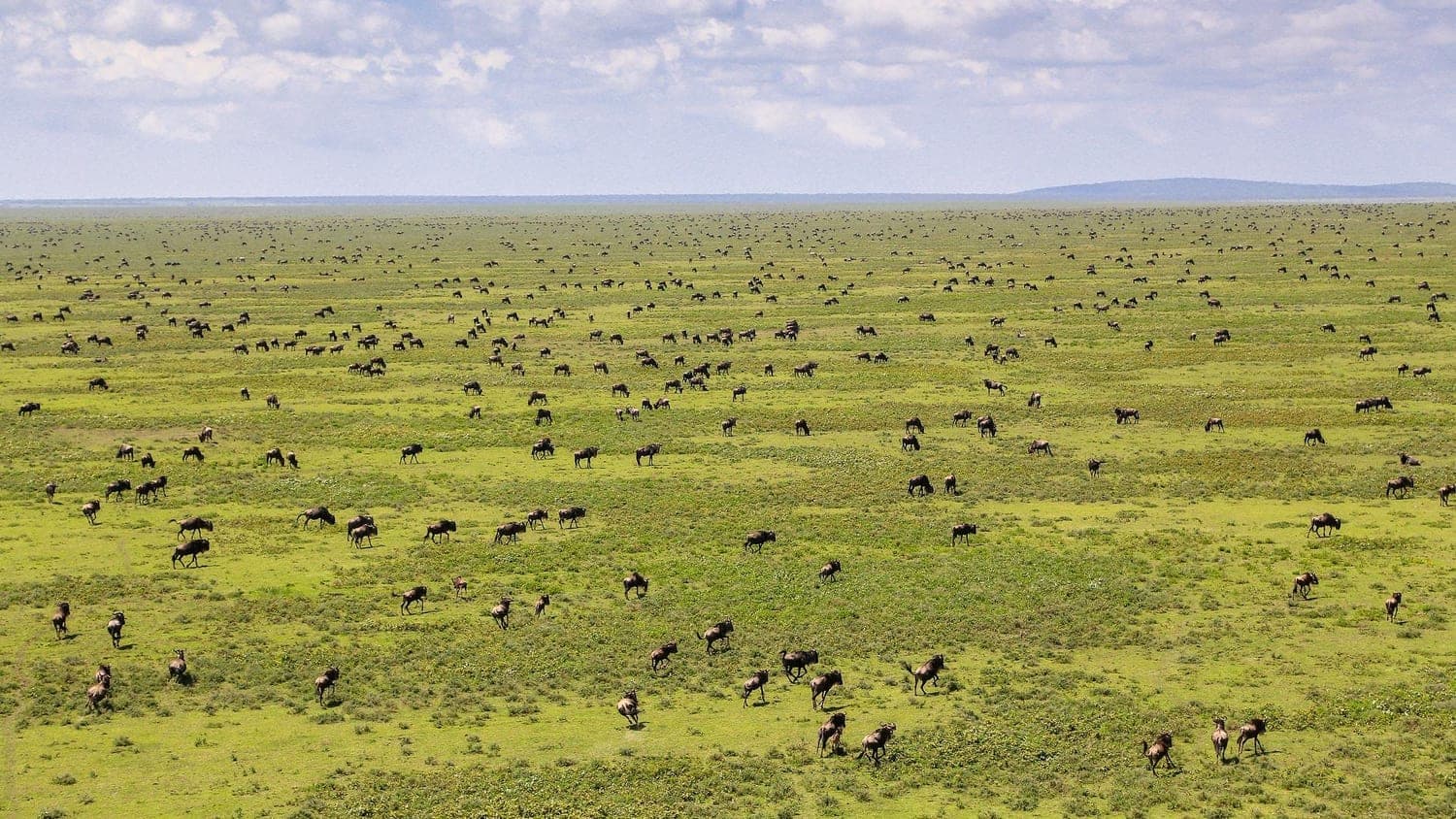
    Herds of wildebeest scattered across green plains beneath a hazy sky

    After breakfast, you set out for a full day of wildlife viewing across the Ndutu plains. The region is an important part of the Great Wildebeest Migration route, and the herds move through the wider ecosystem with the seasonal rain and fresh grazing.

    Your guide will search for concentrations of wildebeest and zebras, and for predators such as lions, cheetahs and hyenas. The open landscape is wonderful for photographing large herds stretching across the horizon, especially in the early sunlight.

    Around midday, you stop for a picnic lunch, then plan the afternoon around current wildlife reports, road conditions and the location of the herds. Sleeping in this area means you can start the next day without travelling from a distant base.

    A whole day dedicated to the southern plains.

    Meals:
    Breakfast, picnic lunch and dinner
  5. 5

    Day 5

    A second full day of migration and wildlife at Ndutu

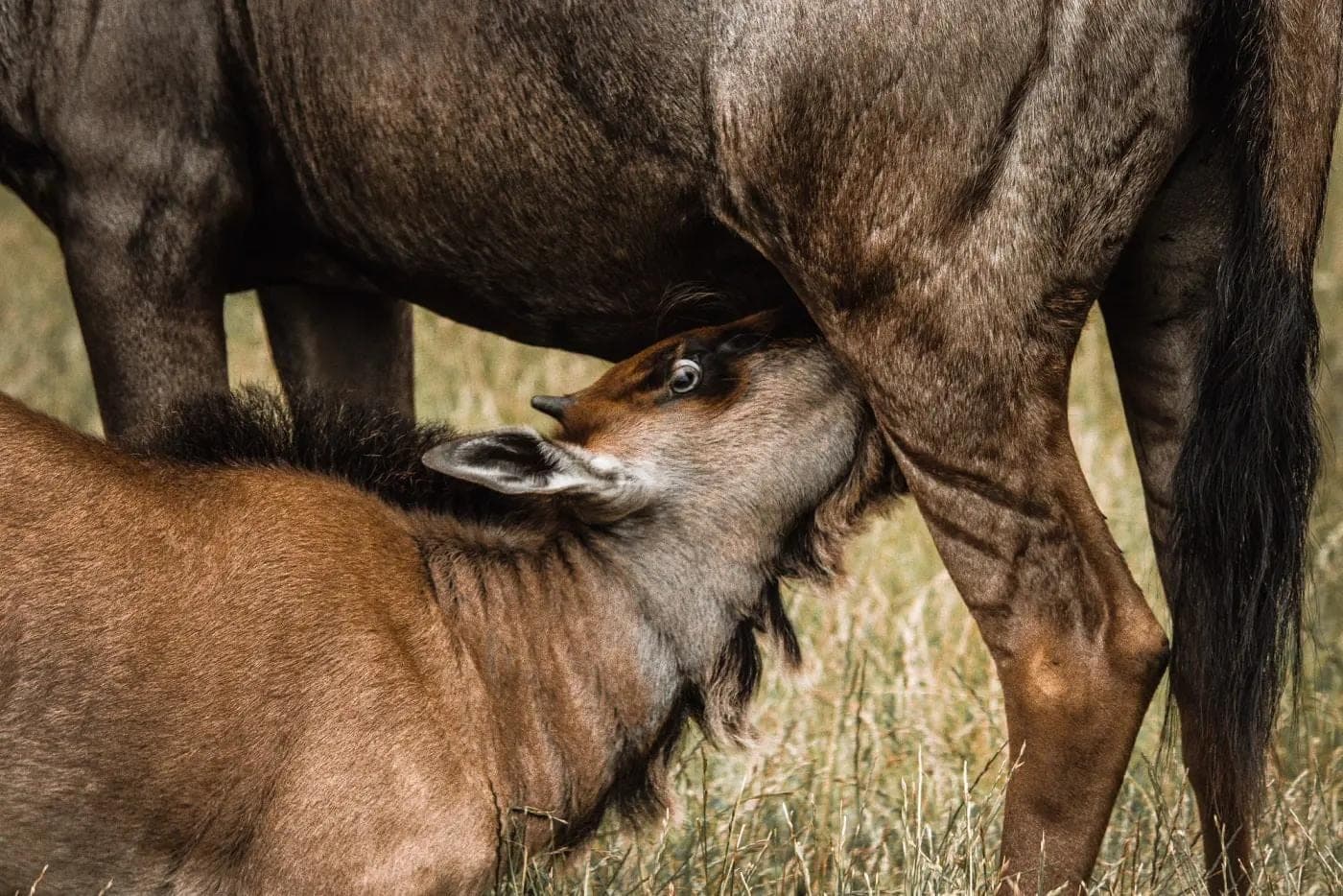
    A young wildebeest calf feeding from its mother

    Today is dedicated to exploring Ndutu at a relaxed pace. Rather than leaving after one game drive, you have a second full day to visit different areas and respond to changing wildlife movements.

    You may see large herds of wildebeest and zebras, gazelles grazing in the grass, giraffes moving through the landscape, and predators resting or hunting. During the early-year calving period, this region can be especially rewarding for watching newborn wildebeest and their mothers.

    After a picnic lunch, your guide adjusts the route to recent sightings, the weather and road conditions, so you can spend more time where wildlife activity is strongest.

    More time to search for the herds, without rushing.

    Meals:
    Breakfast, picnic lunch and dinner
  6. 6

    Day 6

    Ndutu to Central Serengeti, across the great plains

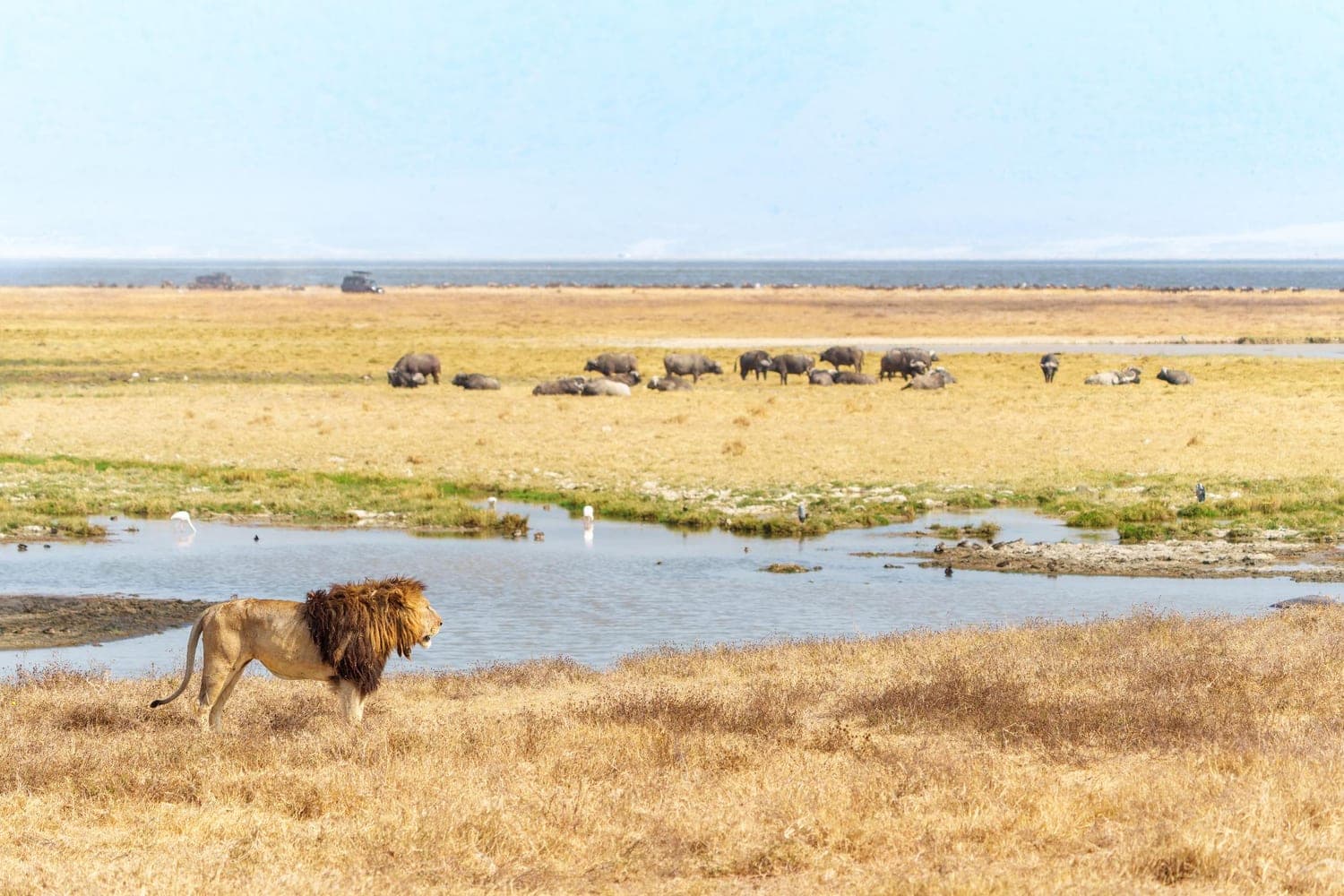
    A male lion beside a shallow pool on the open plains

    After breakfast, you leave Ndutu for Central Serengeti, moving through open grasslands, scattered acacia trees and the rocky outcrops known as kopjes.

    Where permitted and practical, your guide adds wildlife viewing along the route, looking for zebras, wildebeest, giraffes, antelope and predators. You stop for a picnic lunch at a suitable site.

    As you approach the Seronera area, the habitats change, with new chances to search for resident lions, elephants and leopards. You explore selected wildlife areas in the afternoon before reaching camp.

    From the migration plains into the heart of the Serengeti.

    Meals:
    Breakfast, picnic lunch and dinner
  7. 7

    Day 7

    Central Serengeti: lions, leopards, cheetahs and endless plains

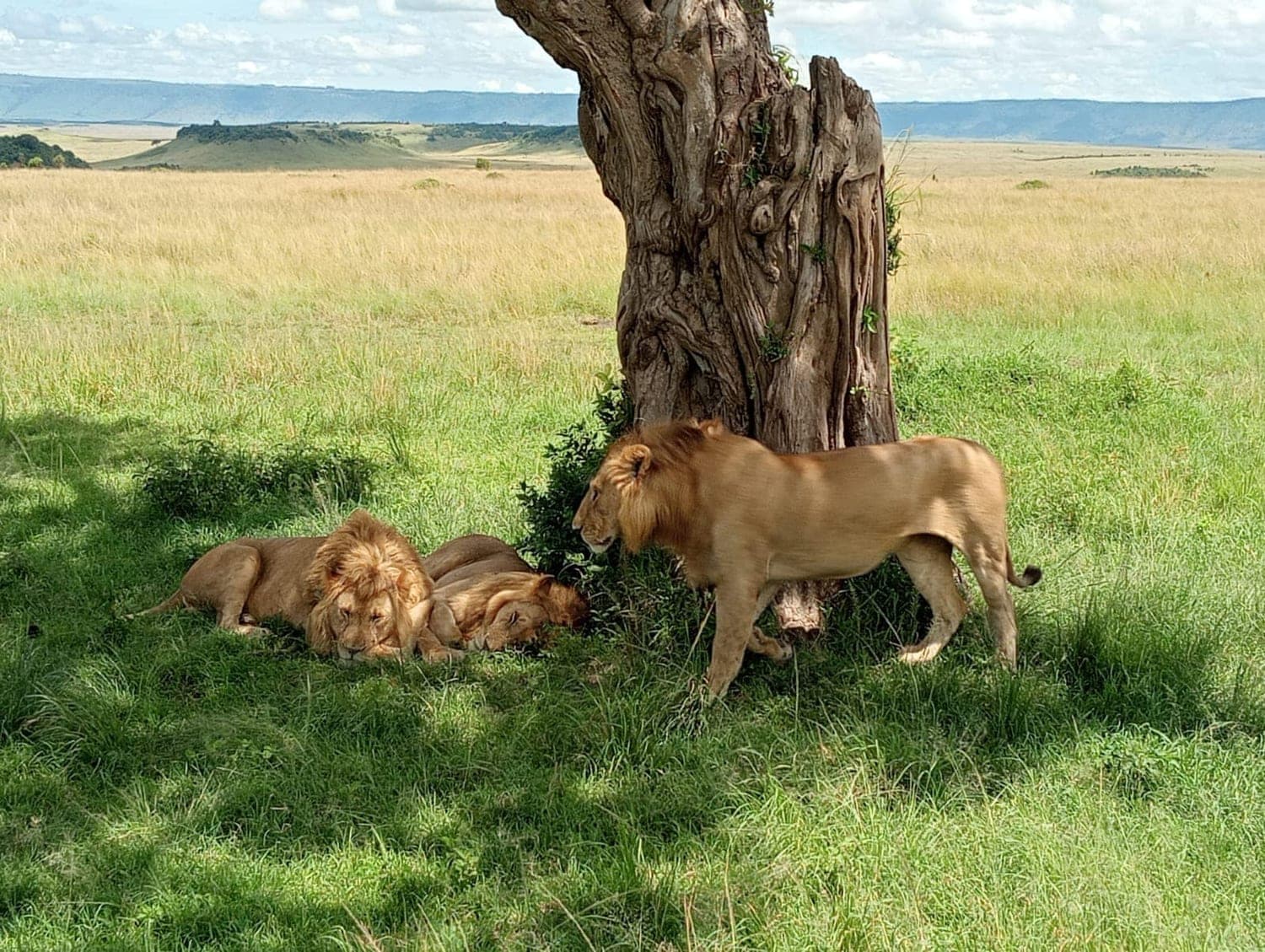
    A lioness and her cubs resting at the base of a tree in the Serengeti

    You leave after breakfast for a full day of game viewing in Central Serengeti, particularly around the Seronera ecosystem, known for its diverse habitats and resident wildlife.

    During the morning, your guide looks for lions resting or moving across the plains, cheetahs scanning open grassland and leopards in suitable woodland. You may also meet elephants, giraffes and zebras. Along the way, you learn about animal behaviour and predator-prey relationships.

    After a picnic lunch, you can spend more time searching for big cats, exploring rocky kopjes or watching herds of elephants, depending on your interests and the day's sightings.

    A full day in one of the Serengeti's most rewarding regions.

    Meals:
    Breakfast, picnic lunch and dinner
  8. 8

    Day 8

    Central Serengeti: a flexible day for more wildlife

    Today gives you another full day in Central Serengeti, with no long transfer to think about. You set out with your guide to explore areas chosen around recent wildlife activity, your interests and the conditions.

    The morning may focus on predators, following reports of lion activity, or exploring open plains where zebras, wildebeest and gazelles are grazing. After a picnic lunch, the extra day gives your guide the freedom to return to promising areas and allow more time at interesting sightings.

    In the evening, there is time to reflect on the contrasts of your journey, from Arusha National Park's forest and lakes to Tarangire's baobabs, Ngorongoro's volcanic scenery and Ndutu's migration plains.

    More time in the Serengeti, at a comfortable pace.

    Meals:
    Breakfast, picnic lunch and dinner
  9. 9

    Day 9

    Final Serengeti morning and flight to Arusha

    After breakfast, you enjoy a final morning game drive, depending on your flight time. This is your last chance to photograph wildlife and enjoy the peaceful plains. Your guide plans the timing carefully, so that you reach the airstrip on time.

    You then board your scheduled flight from the Serengeti to Arusha, subject to airline availability. Travelling by air avoids a long overland journey. On arrival in Arusha, you continue with your onward travel plans, or transfer to extra accommodation if you have requested another night.

    A last look at the Serengeti before flying back to Arusha.

    Meals:
    Breakfast

Choose where you'll sleep

Pick your comfort level, then choose a stay for each part of the route. Your choices go with your booking request. Ombeni confirms availability and your final price, and suggests a similar stay if one is full.

Night 1

Arusha

City hotel

Parrot Hotel

Central Arusha

A modern hotel in the centre of Arusha, an easy first stop after your flight. Air-conditioned rooms and an outdoor pool make it a comfortable place to rest before your safari briefing.

What you can do here

  • Outdoor swimming pool
  • Restaurant on site for your first dinner in Tanzania
  • Short walks to the shops and landmarks of central Arusha

Night 2

Karatu and the Ngorongoro Highlands

Garden lodge

Kudu Lodge

Karatu, Ngorongoro Highlands

A relaxed lodge set in about eleven acres of gardens in Karatu, the highland farming town between Lake Manyara and the Ngorongoro Crater. It suits this route well: you arrive after a day in Tarangire and leave early for the crater the next morning.

What you can do here

  • Swimming pool and gardens to unwind in after the game drive
  • Restaurant and bar for dinner after your first day on safari
  • Games room with darts and pool

Nights 3, 4 and 5

Ndutu and the Southern Serengeti

Mid-range seasonal tented camp

Ndutu Serengeti Heritage

Ndutu, Southern Serengeti ecosystem

A mid-range tented camp on the Ndutu plains, open through the calving season from around December to March. Staying here means you wake up close to the herds, instead of spending the best hours of the morning driving in from the highlands.

What you can do here

  • Early-morning, afternoon and full-day game drives on the calving grounds
  • Wildlife photography in the soft light around sunrise and sunset
  • Quiet evenings in camp, with a campfire when conditions allow

Nights 6, 7 and 8

Central Serengeti

Small tented camp

Serengeti Heritage Tented Camp

Seronera, Central Serengeti

A small tented camp in the Seronera area, in the heart of the Serengeti and close to the airstrip. That makes it a practical last night on this route, with time for a final game drive before you fly back to Arusha.

What you can do here

  • Game drives through the kopjes and grasslands of Central Serengeti
  • Sunrise hot-air balloon safari, as an optional extra
  • Sundowners on the plains, by arrangement

What's included in the price

  • Pickup: From an agreed location in Arusha, Kilimanjaro International Airport (JRO) or Arusha Airport (ARK).
  • Vehicle: Private 4×4 safari vehicle with a pop-up roof for wildlife viewing and photography.
  • Guide: A professional English-speaking driver-guide. Other languages may be available by arrangement.
  • Accommodation: In your selected comfort level, based on two people sharing a double or twin room.
  • Meals: As listed in the day-by-day itinerary, including picnic lunches.
  • Drinks: Soft drinks, plus drinking water in the safari vehicle.
  • Game drives: As set out in the itinerary.
  • Park fees: All park entry, conservation, crater and vehicle fees for the confirmed itinerary.
  • Insurance: Emergency evacuation insurance.
  • Transfers: Road transfers between destinations and to the agreed Arusha or airport drop-off point.
  • Taxes: Government fees and taxes, and applicable statutory charges listed in your written quotation.
  • Flight: Scheduled flight from the Serengeti to Arusha, subject to availability.

What's not included

  • International flights to and from Tanzania.
  • Tanzania visa fees and any passport or travel-document costs.
  • Travel and medical insurance.
  • Single-room supplements for guests who do not share.
  • Meals, drinks or services not listed as included in the itinerary.
  • Alcoholic drinks, laundry, telephone charges and personal expenses.
  • Tips for your driver-guide and accommodation staff.
  • Optional activities, including hot-air balloon safaris ($600 per person), cultural visits ($80 per person) and guided walking activities ($85 per person).
  • Additional nights or itinerary changes beyond the confirmed arrangements.
  • Unscheduled transfers, extra safari days or changes requested after confirmation.
  • Medical expenses or costs arising from personal emergencies.
  • New government fees or charges introduced after your quotation, where the contract allows them to be passed on.

Why this safari is different

The Serengeti is famous for the Great Migration, but it is also home to resident wildlife that makes game drives rewarding all year. Pairing Ndutu with Central Serengeti means you see both sides: the herds on the southern plains, and the predators of the Seronera area.

By the end, you will have experienced several very different sides of Tanzania, from a ranger-guided walk and a canoe trip to elephant-filled savannah, an extraordinary volcanic crater, seasonal migration plains and predator-rich grassland.

Best time to book a calving safari

December to March is the overall Ndutu season, with January and February the prime calving window. Here is what normally happens in each month.

MonthWhat to expect
DecemberThe migration begins gathering. The herds generally start concentrating in the south as the short rains bring fresh grass.
JanuaryCalving begins. More wildebeest arrive and the first births take place.
FebruaryPeak calving. Normally the core month, with huge concentrations of wildebeest, newborn calves and strong predator activity.
MarchLate calving and transition. Newborn and predator sightings can still be excellent, especially early in the month, but the herds may begin moving north and west.
The exact location of the herds varies with rainfall and conditions, and no wildlife sighting can ever be guaranteed.

Book your calving safari

Ndutu camps can fill early in the calving season, so we recommend confirming as early as you can. To receive an accurate quotation, tell us your travel dates, number of travellers, preferred comfort level, room-sharing arrangements and whether you will arrive at JRO, ARK or an Arusha hotel.

  • WhatsApp: +255 785 938 860
  • Email: info@trusttourstz.com
  • Website: trusttourstz.com

Frequently Asked Questions

Still have questions? Ask Ombeni directly on WhatsApp.

It starts from $4,095 per person at Mid-range level, based on 2 adults sharing. Luxury starts from $6,795, High-end luxury from $11,700 and Ultra-premium from $20,700. These are indicative prices, and your written quote confirms the final figure.

Yes, your flight from the Serengeti to Arusha is part of this itinerary, subject to airline availability. It saves a long drive on your last day.

No, the safari starts on Day 1 in Arusha National Park. If you land the day before, or want a rest first, we can add a night in Arusha.

The walk is led by an authorised armed park ranger, and the canoeing is subject to park arrangements and the weather. Your guide will brief you before each activity.

The Ndutu season runs from about December to March. January and February are the prime calving window, with February usually the peak. The exact timing and location change with the rain.

We can't guarantee it, because wildlife sightings are natural events. Travelling in January or February gives you a strong chance, and your guide adapts the route each day to follow the herds.

Yes. Pick your comfort level, then choose a stay for each part of the route. Your choices go with your booking request, and Ombeni confirms availability. If a stay is full, he will suggest a similar one.

Yes. A balloon safari costs $600 per person and is subject to weather and availability. Tick it in the booking box. It is already included at High-end luxury level.

Read before you go

Free, no-fluff guides from the people who run the trips.

All guides →

Ready to go?

Plan your 9-Day Calving Migration Safari with Ombeni

Indicative price per person for 2 adults sharing a private vehicle, at Mid-range level. Your written quote confirms the final price.

From

$4,095

per person