7-Day Cross Migration Safari – Lake Manyara, Ngorongoro & the Serengeti
From
$3,185
per person
Indicative prices per person for 2 adults sharing a private vehicle. Your written quote confirms the final price.
An immersive week on the Northern Circuit, from the Rift Valley and Lake Manyara to the Ngorongoro Crater and four nights in the Serengeti following the herds.
Experience the best of Tanzania's Northern Circuit on an immersive seven-day private safari, combining the dramatic landscapes of the Great Rift Valley, the wildlife-rich Ngorongoro Conservation Area and the legendary Serengeti.
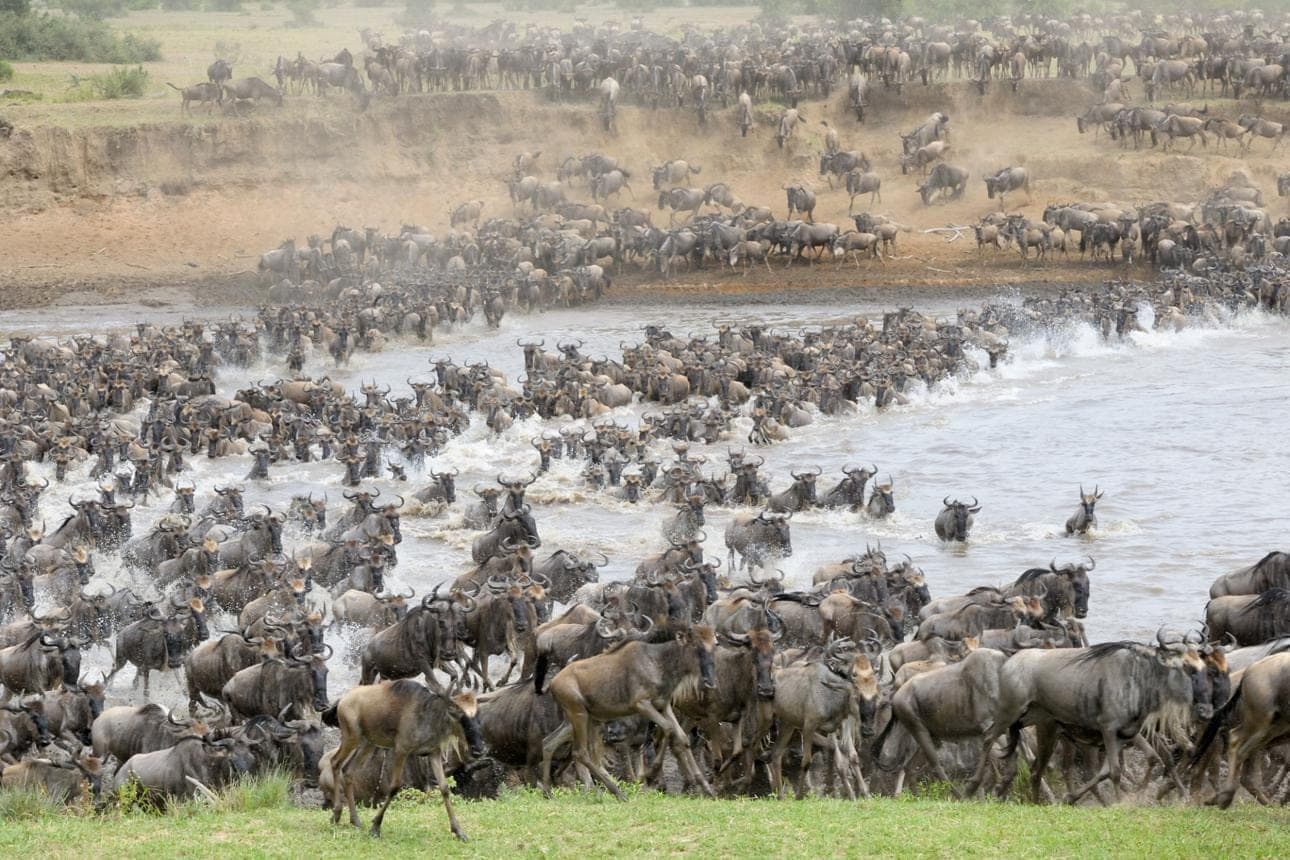
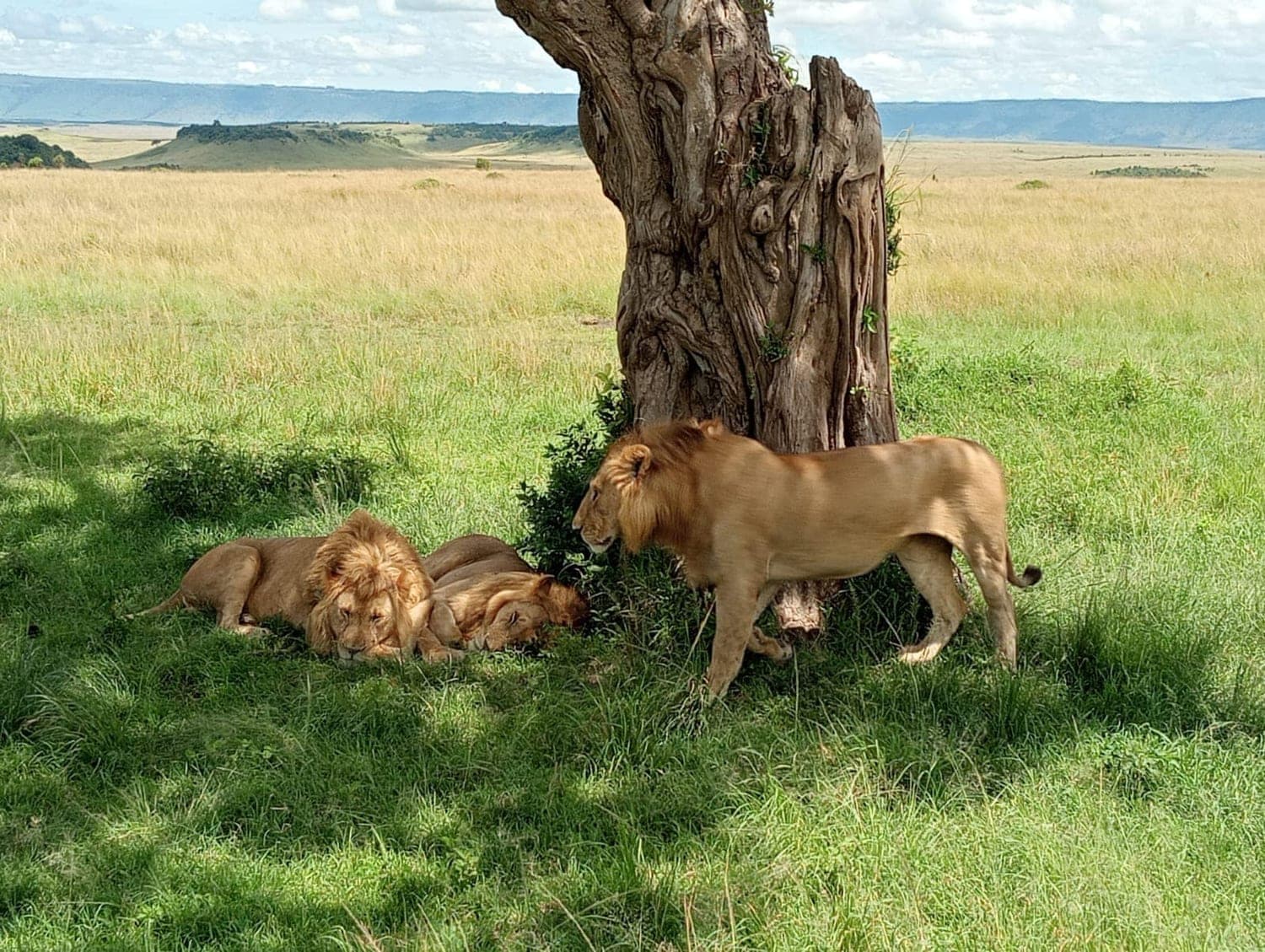
This itinerary is designed for travellers who want to experience the Great Migration and, in the right season, the wildebeest river crossings in the Northern Serengeti. Along the way, you have chances to see the Big Five, large elephant herds, cheetahs, leopards, giraffes, zebras and thousands of wildebeest.
Your safari is private, so your schedule can adapt to wildlife activity, photography and the location of the herds. During the crossing season, our team keeps track of where the herds are and plans your game drives around the most promising areas.
This isn't simply a tour of a list of parks. The Serengeti changes constantly, so rather than promising a crossing, we promise to put you in the right ecosystem, at the right time of year, with an experienced guide who understands how to follow the migration.
Duration
7 days / 6 nights
Safari style
Private, with your own vehicle and guide
Main experience
Big Five, Great Migration and predators
Best period
July to October
Route
Arusha · Lake Manyara · Ngorongoro Crater · Central and Northern Serengeti
Start
Kilimanjaro Airport
Finish
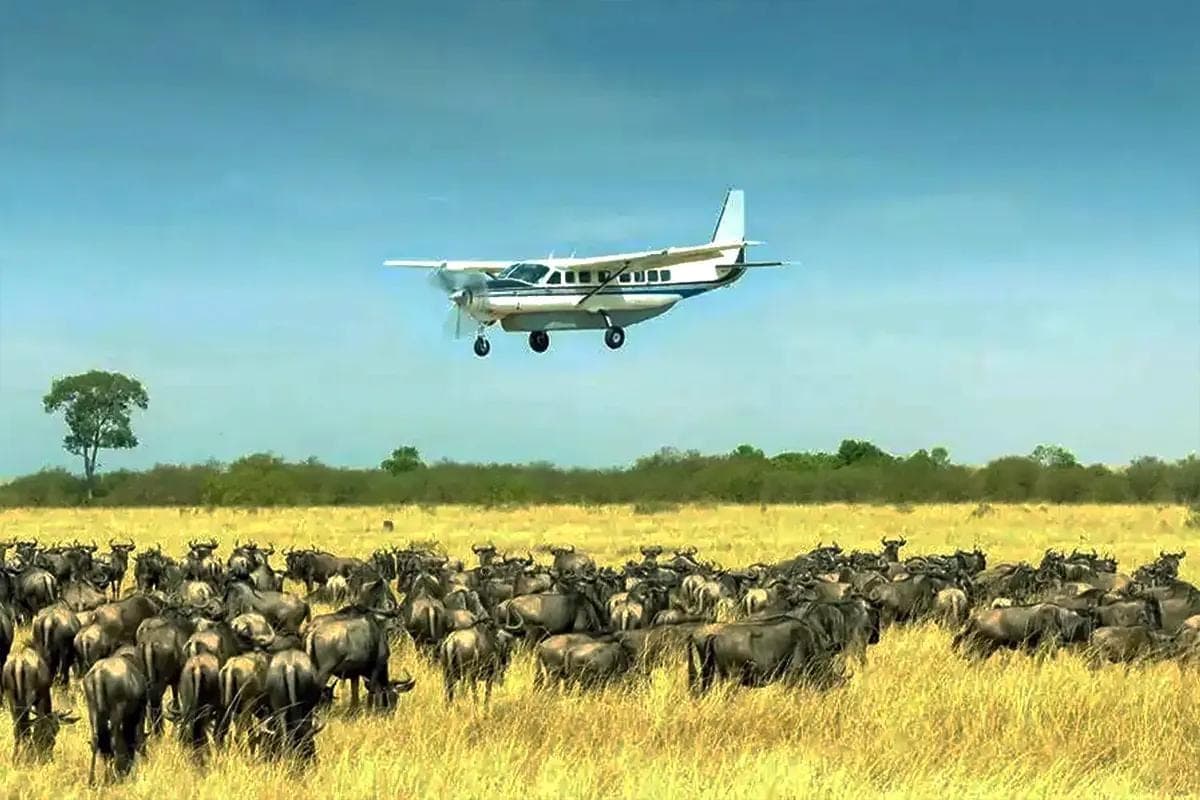
Arusha or Kilimanjaro Airport, by road or optional flight
Vehicle
Private 4×4 safari vehicle with a pop-up roof
Highlights
★Lake Manyara: Forest elephants, baboons and blue monkeys below the Rift Valley wall.
★Ngorongoro Crater: A full game drive searching for the Big Five.
★Four nights in the Serengeti: Time for the plains, the predators and the migration.
★Two nights in the north: Follow the herds around the Mara River.
★A gentler last day: Finish with a night in the centre, not a drive from the far north.
Best months to travel: Jul · Aug · Sep · Oct
Choose your comfort level
The route stays the same at every level. What changes is where you sleep, how you travel and how much is arranged for you.
Mid-range
From $3,185per person
$455–$555 per day · $3,185–$3,885 for 7 days
A comfortable, well-organised safari with excellent wildlife viewing and good value, without paying for extensive luxury services.
Comfortable 2–3-star lodges
Quality tented accommodation where appropriate
Private 4×4 safari vehicle
Professional safari guide
Full board
Park and conservation fees
Game drives
Airport transfers
Luxury
From $5,285per person
$755–$1,200 per day · $5,285–$8,400 for 7 days
Upgraded lodges and premium tented camps with stylish interiors, excellent dining and attentive hospitality, while the safari stays focused on wildlife.
Premium 4–5-star lodges and camps
Prime-location accommodation where available
Private 4×4 safari vehicle
One-way flight from the Serengeti to Arusha or Zanzibar
Highly experienced guide
Swimming pool at the lodge
Full board
Park and conservation fees
Private airport transfers
More flexibility around the daily schedule
High-end luxury
From $9,100per person
$1,300–$2,200 per day · $9,100–$15,400 for 7 days
Exceptional camps and lodges with premium suites, refined cuisine and personal service, chosen for location and exclusivity.
High-end luxury lodges and camps
Private luxury safari vehicle
Flights between the Serengeti and Arusha or Zanzibar, both ways
Highly experienced private guide
All-inclusive premium meals and service
Flexible game-drive schedule
Private airport transfers
Private swimming pool
Hot-air balloon safari
Emergency assistance during the safari, including helicopter evacuation
Priority accommodation selection where available
Ultra-premium
From $16,100per person
$2,300–$5,000 per day · $16,100–$35,000 for 7 days
Created for special celebrations and discerning travellers. Inclusions are tailored to the property and flights you choose, because not every camp offers every service.
Exceptional private suites or villas
The highest level of personal hospitality
Premium dining
Bespoke guiding arrangements
Private or charter-flight options
How the prices work
These are indicative private-safari planning ranges per person, based on 2 adults sharing one private safari vehicle and a room. They are not confirmed quotations.
Your final cost depends on your travel dates, the number of guests, camp availability, flight fares and the exact services you choose. Camps near the Mara River can sell out early in the crossing season, so we confirm your price and accommodation in writing before you pay a deposit.
To request a price for one traveller or a group of three to six, select your group size in the booking box and Ombeni will quote you directly.
Your private vehicle and guide are shared only by your own party, so the more of you there are, the less each person pays.
Day-by-Day Itinerary
1
Day 1
Kilimanjaro Airport to Lake Manyara
Your Tanzanian safari begins at Kilimanjaro International Airport, where your private guide welcomes you, helps with your luggage and introduces your 4×4 safari vehicle. After a short briefing, you drive towards Lake Manyara, passing farmland, villages, coffee and banana plantations and the dramatic scenery of the Great Rift Valley.
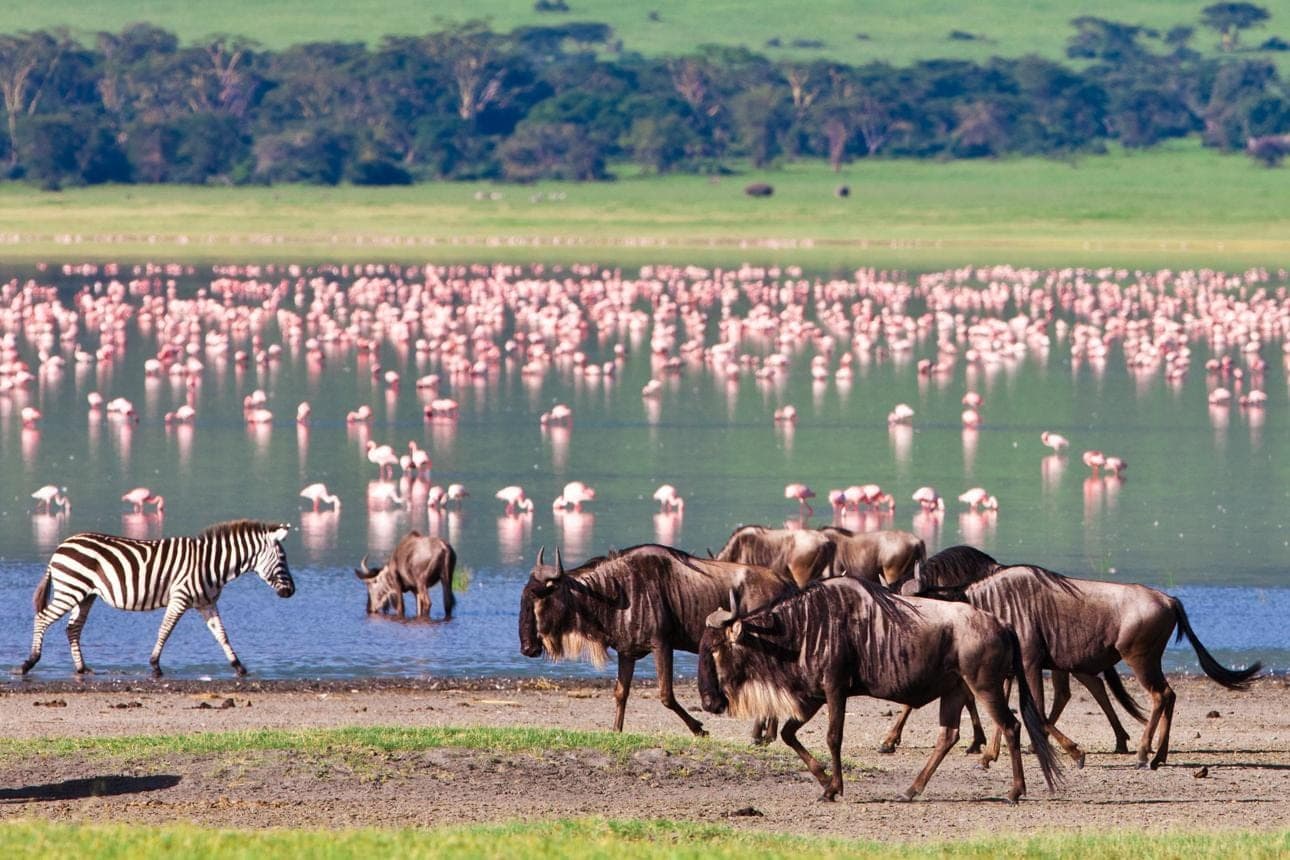
After lunch, depending on your arrival time, you enter Lake Manyara National Park for an afternoon game drive. The park lies between the Rift Valley escarpment and the lake and, although it is fairly small, it holds a remarkable range of habitats and wildlife. You may see elephants in the forest, giraffes in the open woodland, large troops of baboons and blue monkeys, zebras, wildebeest, buffalo and many birds. At different times of year, the lake attracts thousands of flamingos and other waterbirds.
As the sun sets, you leave the park for your lodge, dinner and a restful night.
Forest, lake and Rift Valley views on your first game drive.
A morning arrival gives you the most time in the park. If you land later, we adjust the plan around your flight.
After breakfast, you leave for the Ngorongoro Conservation Area. The road climbs gradually into the highlands, with lovely views over the countryside, until you reach the crater rim and the land suddenly opens into one of Africa's most extraordinary sights. The crater is an ancient volcanic caldera about 20 kilometres across.
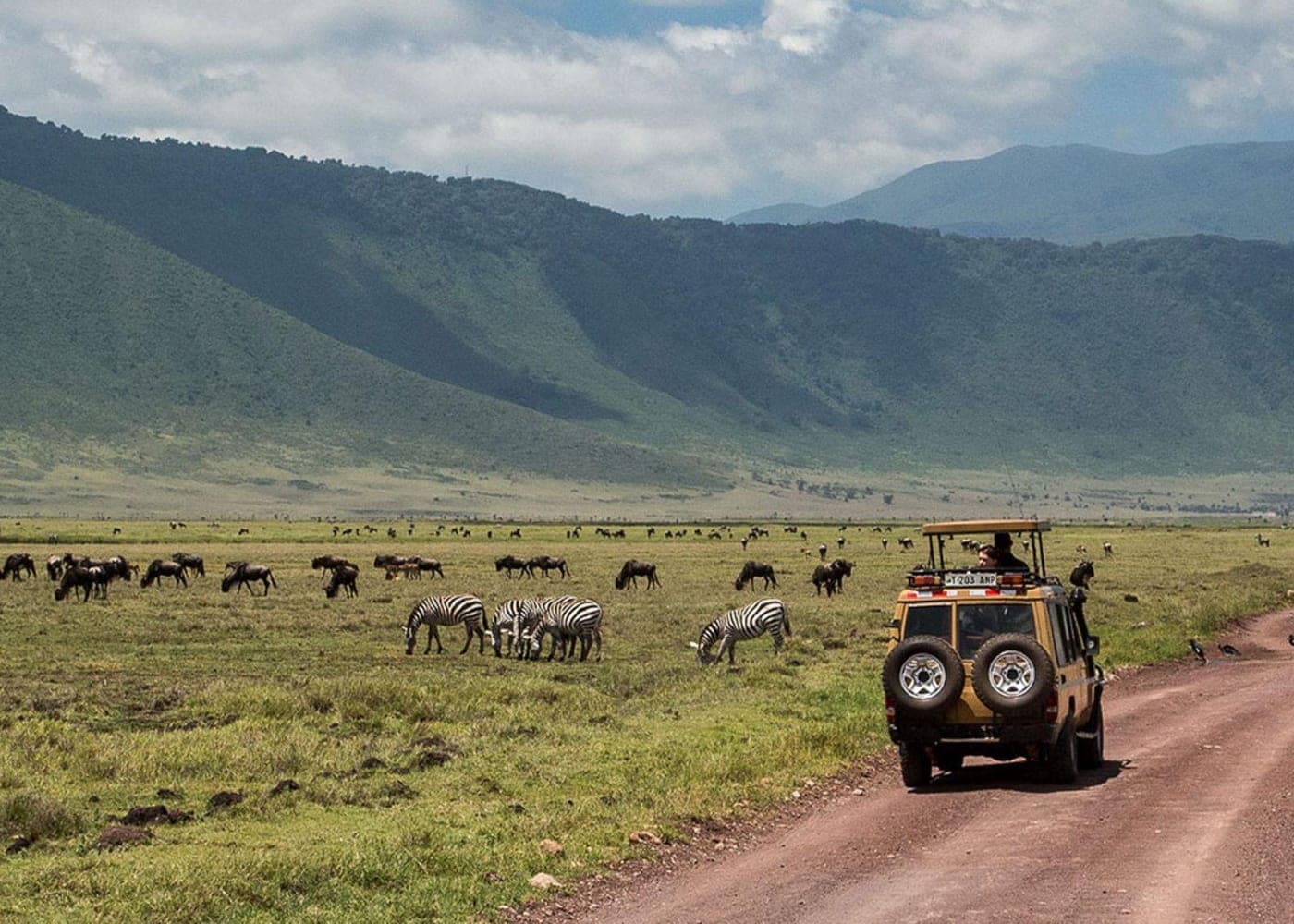
You descend for a long game drive on the crater floor, one of the best places in Tanzania to search for the Big Five. The open grasslands make wildlife easy to watch, while the forests, lake and wetlands offer an exceptional range of species. You may see lions in the grass, elephants, buffalo, zebras, wildebeest, hippos and possibly cheetahs. Black rhino can sometimes be seen on the plains too.
Your guide stops for photographs and a picnic lunch. In the late afternoon, you climb back to the rim and continue to your lodge to enjoy the cool highland air.
A long day in the crater, then a quiet evening in the highlands.
After an early breakfast, you set off for Serengeti National Park. Your safari continues as soon as you leave Ngorongoro, with the highlands gradually giving way to vast open plains. Your guide chooses the route according to the season and where wildlife activity is strongest.
Once inside the park, you begin your first long game drive. The plains can stretch to the horizon, and wildlife may appear almost anywhere. Predators such as lions, cheetahs, leopards and hyenas are often found near the herds, because so much prey creates good hunting opportunities.
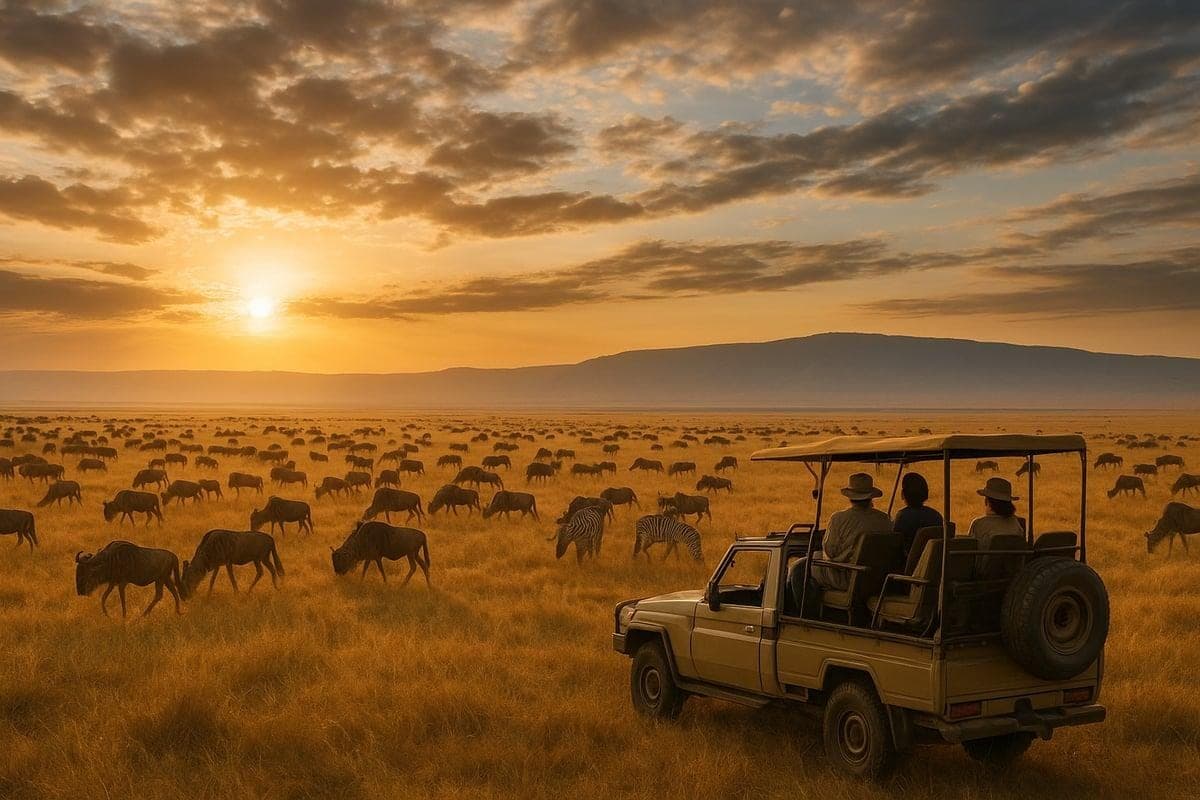
As the light softens, you enjoy the end of your game drive before heading to camp. A Serengeti sunset is one of the defining moments of any Tanzanian safari, and the sounds of the wild carry on through dinner.
You wake before sunrise and leave with your guide for an early game drive. The first hours of the day are among the best for wildlife, as predators are often active and the cool air keeps animals moving.
During the crossing season, the aim is to reach suitable crossing areas in the Northern Serengeti as early as practical. After a picnic or camp lunch, you explore the migration zone, where large herds of wildebeest and zebra may gather around the Mara River.
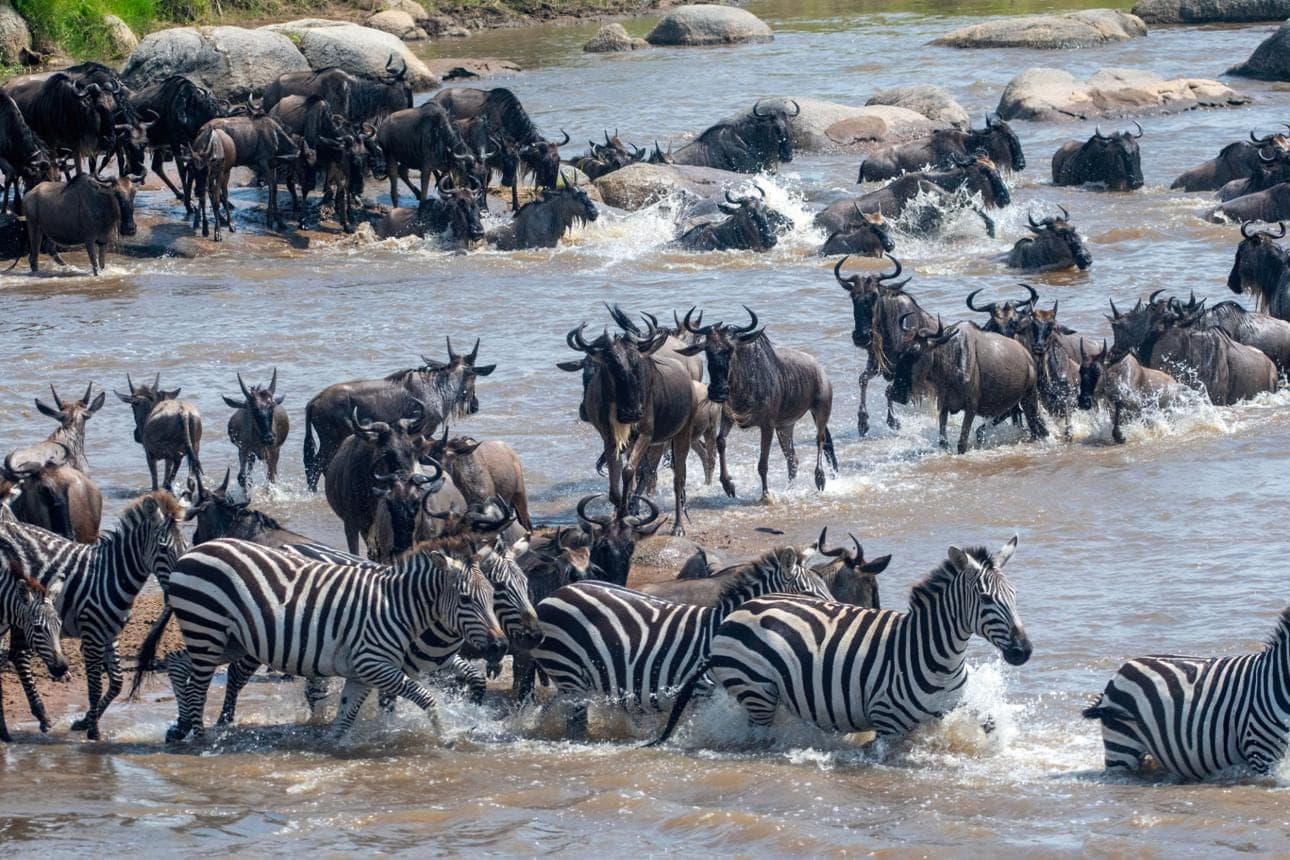
You may see herds on the riverbanks, looking for safe crossing points before suddenly committing to the water, with crocodiles waiting in the river. Nature decides when and where this happens, and herds sometimes wait for hours or even days. If they aren't at a crossing point, your guide turns to the wider migration area and other wildlife, rather than spending the whole day waiting in one place.
Full-day migration tracking in the Northern Serengeti
Another early start lets you carry on following the migration. This day is deliberately flexible, because the Great Migration can't be planned like a scheduled attraction. Your guide uses the latest information on herd movements to decide where to go.
You may spend the morning following wildebeest and zebra across the plains, watching predators or waiting near the river if large herds are gathering. The landscape here is beautiful, with kopjes, open grasslands, riverine vegetation and woodland.
If the herds are around the Mara River, your afternoon may be spent watching the banks for crossing activity. If they have moved away, your guide explores the nearby plains and wildlife corridors instead. The aim is to experience the migration as a living ecosystem, not simply to tick off the river. At some luxury and ultra-premium camps, the evening can end with a private sundowner, depending on the camp's location and rules.
A flexible day built around the latest herd movements.
Your final full day in the Serengeti begins with another early game drive. The first light is excellent for photography, and lions, cheetahs and leopards may still be active.
Depending on the season and the wildlife, your guide may stay a little longer in the north before driving south through the Serengeti. After lunch, you continue your game drive and make the most of your last afternoon in the park.
This is your chance to slow down and enjoy the place itself. You may see large herds of zebra and wildebeest, giraffes crossing the plains, elephants near water and predators resting beneath acacia trees. After sunset, you reach your camp or lodge for a relaxed last dinner in the Serengeti.
Final game drive and return to Arusha or Kilimanjaro
You wake early for a last Serengeti game drive. Depending on when you leave, you may enjoy a short sunrise drive followed by breakfast, or take breakfast with you and explore for several hours.
You then leave the Serengeti and head towards Arusha, by road or on an optional flight. The details depend on your onward plans. With a late international departure, you can continue to Kilimanjaro International Airport, and with more time, you can enjoy lunch in Arusha first.
If your flight leaves later in the evening, we can arrange a day room or an optional activity in Arusha.
A last sunrise on the plains before heading home.
Meals:
Breakfast and lunch
Choose where you'll sleep
Pick your comfort level, then choose a stay for each part of the route. Your choices go with your booking request. Ombeni confirms availability and your final price, and suggests a similar stay if one is full.
Circular two-storey thatched rondavels on the edge of the escarpment at Mto wa Mbu, with wide views over Lake Manyara and the Great Rift Valley. The pool and bar sit close to the cliff edge.
What you can do here
Game drives in Lake Manyara National Park
Swimming pool with views over the lake
Sunset views across the Rift Valley
Tented lodge
Maramboi Tented Lodge
Between Tarangire and Lake Manyara
A tented lodge on open grassland between Tarangire and Lake Manyara, around 20 minutes from the Tarangire gate. Raised tents look out towards the lake and the Rift Valley escarpment.
What you can do here
Game drives in Tarangire or Lake Manyara
Swimming pool overlooking the plains
Evening views of the Rift Valley escarpment
Boutique villa lodge
Manyara's Secret
Mto wa Mbu, near Lake Manyara National Park
A small lodge of private villas near Mto wa Mbu, a short drive from the Lake Manyara park gate. Villas have their own terraces and pools, with views towards the lake.
What you can do here
Game drives in Lake Manyara National Park
Your own pool and terrace at the villa
Quiet evenings looking out over the lake
Luxury lodge
Lake Manyara Kilimamoja Lodge
Rift Valley rim, near Mto wa Mbu
A lodge on the rim of the Great Rift Valley, about 5 km from Mto wa Mbu and 25 minutes from the park gate. Suites have private verandas, and on clear days the views can reach Mount Meru and Kilimanjaro.
What you can do here
Game drives in Lake Manyara National Park
Infinity pool
Spa treatments, by arrangement
Luxury tented lodge
Chem Chem Lodge
Burunge Wildlife Management Area, between Tarangire and Lake Manyara
An intimate lodge of eight tented suites on a private concession between Tarangire and Lake Manyara, including a two-bedroom family suite. Being outside the national parks means you can walk and drive at night as well as take game drives.
What you can do here
Guided walking safaris
Night drives
Game drives in Tarangire or Lake Manyara
Night 2
Karatu and the Ngorongoro Highlands
Garden lodge
Kudu Lodge
Karatu, Ngorongoro Highlands
A relaxed lodge set in about eleven acres of gardens in Karatu, the highland farming town between Lake Manyara and the Ngorongoro Crater. It is a short drive from the Ngorongoro gate, so it works well before or after a day in the crater.
What you can do here
Swimming pool and gardens to unwind in after the game drive
Restaurant and bar for dinner after a day on safari
Games room with darts and pool
Lodge on a working coffee farm
Ngorongoro Farm House
Karatu, Ngorongoro Highlands
A lodge on a coffee farm in the Karatu highlands, close to the Ngorongoro Crater. The farm also grows vegetables and keeps livestock, which gives the place a warm, rural feel after a day in the park.
What you can do here
Walks around the coffee farm
Outdoor swimming pool
Massages and dinner on the terrace
Lodge on the crater rim
Ngorongoro Serena Safari Lodge
Ngorongoro Crater rim
Built into the rim of the crater, with traditional decor and sweeping views over the crater floor. Sleeping on the rim puts you close to the descent road for your morning game drive.
What you can do here
Views across the crater from the lodge
An early start for your crater game drive
Relaxed evenings in the lodge after a day in the park
Large lodge on the crater rim
Ngorongoro Sopa Lodge
Eastern rim of the Ngorongoro Crater
A large lodge on the quieter eastern rim of the crater, with its rooms set around a central swimming pool. Your Ngorongoro stay here comes with views over the crater floor.
What you can do here
Swimming pool at the centre of the lodge
Crater views from the rim
An early start for your crater game drive
Simple lodge near the crater rim
Rhino Lodge
Ngorongoro Crater rim
A simple, good-value lodge in the forest close to the crater rim, with 24 en-suite rooms. It puts you close to the crater for much less than the bigger rim lodges.
What you can do here
Forest views from the lodge
An early start for your crater game drive
Quiet evenings by the fire
Mid-range tented camp
Ngorongoro Kuhama Camp
Ngorongoro Highlands
A mid-range tented camp in the highlands, close to the descent road into the crater, which suits an early start.
What you can do here
An early start for your crater game drive
Evenings in a highland camp
Meals in camp
Lodge on a coffee farm
Farm House Valley Lodge
About 20 minutes from Karatu
A lodge on a large coffee farm, about 15 minutes from the Lodoare gate of the conservation area, with a pool and evening campfires.
What you can do here
Walks around the coffee farm
Swimming pool
Evening campfire
Lodge on a working coffee farm
Acacia Farm Lodge
Edge of Karatu town
A lodge on an active coffee farm at the edge of Karatu, with rooms in private cabins, a pool and a spa.
What you can do here
Nature walks and farm tours
Outdoor swimming pool
Spa and fitness centre
Mid-range lodge
Bougainvillea Safari Lodge
Karatu
A mid-range lodge of cottages and spacious tents in landscaped gardens, with a pool, a bar and a restaurant.
What you can do here
Swimming pool
Landscaped gardens
Restaurant and bar
Mid-range hilltop lodge
Karatu Simba Lodge
Hilltop near Karatu
A comfortable mid-range lodge on a scenic hilltop near Karatu, with a pool, a lounge and a restaurant.
What you can do here
Swimming pool
Hilltop views
Local and international dining
Good-value cottage lodge
Country Lodge Karatu
Eastern edge of Karatu town
Affordable cottage-style rooms at the edge of Karatu, about 30 minutes from both the crater and Lake Manyara.
What you can do here
Coffee plantation tours
Village visits
Forest hikes
Good-value lodge
Tloma Lodge
Karatu
A comfortable and affordable lodge in Karatu, offering a good base for exploring the crater.
What you can do here
An easy base for the crater
Dinner at the lodge
Quiet evenings in the highlands
Cottage lodge
Marera Valley Lodge
Karatu, near the Ngorongoro Crater
A lodge of private cottages at the edge of Karatu, close to the village of Rhotia and about 30 minutes from the Ngorongoro gate. Each cottage has its own veranda, making it a restful stop between Tarangire and the crater.
What you can do here
Swimming pool for hot afternoons
Coffee estate tours, birding and hiking nearby
Massages and an evening campfire
Colonial-style manor on a coffee estate
The Manor at Ngorongoro
Karatu Highlands
An elegant manor house on a large Arabica coffee estate in the Karatu highlands, just outside the Ngorongoro Conservation Area. Guests stay in private suites set in cottages around the grounds.
What you can do here
Walks through the coffee estate
Fine dining in the manor house
Quiet time in the gardens before the crater
All-inclusive luxury lodge
Neptune Ngorongoro Luxury Lodge
Ngorongoro Highlands
An all-inclusive lodge of spacious cottages set in lush gardens, a calm base in the highlands for your crater day.
What you can do here
Time in the gardens after your game drive
All-inclusive dining at the lodge
Historic working coffee farm
Gibb's Farm
Near Karatu, on the slopes of the Ngorongoro highlands
A working farm with roots going back to 1929, set among gardens and coffee on the forested slopes below the Ngorongoro Conservation Area. Guests stay in private cottages, and much of the food comes from the farm.
What you can do here
Farm walk, including milking and coffee roasting
Guided forest walks and a waterfall hike
Spa treatments inspired by Maasai healing
Luxury forest lodge
The Retreat at Ngorongoro
About 15 minutes from Karatu town
A luxury lodge on forested land near Karatu, with secluded cottages that have fireplaces and private decks overlooking the trees.
What you can do here
Infinity pool
Spa and gym
Fine dining
Lodge on a working coffee plantation
The Plantation Lodge
Karatu
A stylish lodge on a working farm and coffee plantation, with rooms and suites spread through park-like gardens around a large pool.
What you can do here
Guided walks through the coffee plantation
Large swimming pool
Sundowners on the pool patio
Farmhouse-style lodge
Oldeani Ngorongoro Mountain Lodge
Karatu, about 15 minutes from the Lodoare gate
A farmhouse-style lodge of suites on about 40 acres, with views of the Oldeani Mountains and a pool.
What you can do here
Swimming pool
Mountain views
Dinner in the ravine
Cottage lodge among coffee plantations
Ngorongoro Coffee Lodge
Between Rhotia and Karatu
A lodge of cottages surrounded by coffee plantations and forest, each with a private veranda and a fireplace.
What you can do here
Views over coffee plantations and forest
A fire in your cottage
Relaxing after a day in the park
Colonial-style lodge on a coffee plantation
Kitela Lodge
Karatu highlands
An upper mid-range lodge on a working coffee plantation above Karatu, built in the style of old colonial farms, about 30 minutes from the Lodoare gate.
What you can do here
Coffee plantation walk
Guided walks
Cultural visits to local communities
Luxury lodge on the crater rim
Ngorongoro Lodge Meliá Collection
Ngorongoro Crater rim
A rebuilt lodge on the rim of the crater, reopened in 2023 on the site of one of the first lodges at Ngorongoro.
What you can do here
Crater views from the rim
An early start for your crater game drive
Dining at the lodge
Boutique camp of dome tents
The Highlands
Slopes of Olmoti volcano, north of the crater
A small Asilia camp of eight dome-shaped tents, inspired by Maasai homes, on the slopes of Olmoti volcano. Each has a wood-burning stove against the cool highland nights.
What you can do here
Guided climb of Olmoti volcano
Half-day visit to Empakaai Crater
Crater game drives and Maasai community visits
Ultra-luxury lodge on the crater rim
&Beyond Ngorongoro Crater Lodge
Ngorongoro Crater rim
One of Africa's most celebrated lodges, with opulent suites on the crater rim and breathtaking views over the crater floor. It is closed for a major rebuild and due to reopen in 2027, so we confirm availability for your dates.
What you can do here
Crater views from your suite
An early start for your crater game drive
Personal service and fine dining
Night 3
Central Serengeti
Small tented camp
Serengeti Heritage Tented Camp
Seronera, Central Serengeti
A small tented camp in the Seronera area, in the heart of the Serengeti and close to the airstrip. That makes it a practical base for a final game drive before you fly back to Arusha.
What you can do here
Game drives through the kopjes and grasslands of Central Serengeti
Sunrise hot-air balloon safari, as an optional extra
Sundowners on the plains, by arrangement
Mid-range tented camp
Serengeti Kati Kati Tented Camp
Central Serengeti
A comfortable tented camp in the heart of the Serengeti, well placed for game drives in the central park.
What you can do here
Game drives through the central plains
Meals together in the camp
Evenings close to the wilderness
Hillside tented lodge
Kubu Kubu Tented Lodge
Central Serengeti
Spacious tents raised on wooden platforms on a ridge overlooking the central plains, about half an hour from Seronera. It is a comfortable base for the Seronera Valley, with big views from the camp.
What you can do here
Game drives in the Seronera Valley and central plains
Infinity pool with views over the plains
Sundowners at camp
Hilltop lodge
Serengeti Serena Safari Lodge
Central Serengeti
A lodge perched on a hill above the plains, blending African architecture with modern comfort, with a swimming pool and wide views.
What you can do here
Game drives from the heart of the park
Swimming pool with views over the plains
Restaurant dining after a day out
Classic park lodge
Seronera Wildlife Lodge
Heart of the Serengeti
A classic lodge in the heart of the park, built around a rocky outcrop.
What you can do here
Game drives in the Seronera Valley
Views from the kopje
Dinner at the lodge
Tented lodge
Kimarishe Serengeti Lodge
Central Serengeti, about 24 km from Seronera Airstrip
A safari-tented lodge in Central Serengeti, a comfortable base for game drives around Seronera.
What you can do here
Game drives in the central park
Evenings at the lodge
Early starts for big cats
Tented camp
Serengeti Kuhama Camp
Makoma Hill, Central Serengeti
A tented camp at the foot of Makoma Hill, south-west of Seronera, about 45 minutes from the airstrip.
What you can do here
Game drives in the central park
Searching for big cats
Meals in camp
Luxury tented suites
Lemala Nanyukie
Eastern Serengeti
A boutique camp of canvas suites in the eastern Serengeti, each with a private deck and plunge pool. The area is known for excellent predator viewing, particularly cheetah.
What you can do here
Game drives in a quieter part of the park
Your own plunge pool on the deck
Searching for cheetahs on the eastern plains
Tented camp
Lemala Ewanjan
Seronera Valley, Central Serengeti
A tented camp in a secluded part of the Seronera Valley, one of the Serengeti's best areas for big cats.
What you can do here
Game drives in the Seronera Valley
Searching for lions and leopards
Quiet evenings in camp
Upscale safari lodge
Serengeti Explorer by Elewana
Nyaburo Hills, Serengeti
A large new lodge on the Nyaburo Hills, built on the site of the former Serengeti Sopa Lodge, with rooms and suites overlooking the plains.
What you can do here
Game drives from the hills
Wide views over the plains
Relaxing at the lodge
Luxury lodge
Meliá Serengeti Lodge
Nyamuma Hills, above the Mbalageti valley
A luxury lodge of 50 rooms overlooking the Mbalageti River valley, with a pool facing the park, under an hour from Seronera Airstrip.
What you can do here
Swimming pool with park views
Game drives in the valley
Restaurant and bar
Small semi-permanent camp by Asilia
Dunia Camp
Just north of the Moru Kopjes
A small camp of eight luxury en-suite tents in a lesser-visited part of the Serengeti, with easy access to Seronera and the southern plains.
What you can do here
Game drives around the Moru Kopjes
Quiet areas with fewer vehicles
Evenings in a small camp
Classic 1930s-style camp
Serengeti Pioneer Camp by Elewana
Moru Kopjes, south-central Serengeti
A camp of 12 tents on a kopje overlooking the Moru Kopjes and Lake Magadi, inspired by the mobile safari camps of the 1930s.
What you can do here
Game drives around Moru and Lake Magadi
Views from the kopje
A classic safari camp atmosphere
Luxury hilltop lodge
Singita Sasakwa Lodge
Grumeti Reserve, western Serengeti
A hilltop lodge of private cottages in the Grumeti Reserve, a private concession bordering the national park in the western Serengeti. Each cottage has its own pool, and the reserve funds conservation and local education.
What you can do here
Game drives in the private Grumeti Reserve
Your own pool at the cottage
Views across the plains from the hilltop
High-end safari lodge
Four Seasons Safari Lodge Serengeti
Central Serengeti
A high-end lodge in the central Serengeti with luxurious suites, an infinity pool, a spa and excellent service, close to prime wildlife areas.
What you can do here
Game drives in the central Serengeti
Infinity pool and spa
Fine dining at the lodge
Nights 4 and 5
Northern Serengeti and the Mara River
Seasonal mobile tented camp
Mara Kati Kati Tented Camp
Northern Serengeti, near Kogatende
A simple, wild mobile camp of about 11 tents, around 20 minutes from Kogatende airstrip. It is set up in the north for the migration months, and wildlife can pass through the camp itself.
What you can do here
Game drives along the Mara River
Searching for river crossings
Evenings in a true bush camp
Seasonal mobile tented camp
Nyikani Migration Camp
Northern Serengeti, about 25 minutes from Kogatende airstrip
A mobile camp of comfortable en-suite safari tents, which spends the crossing months near the Mara River and moves south to Ndutu for the calving season.
What you can do here
Game drives around the Mara River
Searching for river crossings
Meals together in camp
Luxury tented suites
Lemala Kuria Hills Lodge
Wogakuria Hills, Northern Serengeti
A lodge of 15 glass-fronted tented suites set among boulders in the Wogakuria Hills, each with a plunge pool. It is about 45 minutes from Kogatende airstrip and closes in April and May.
What you can do here
Game drives to the Mara River
Your own plunge pool
Views across the northern hills
Permanent luxury tented camp
Serengeti Bushtops
Wogakuria, Northern Serengeti
A permanent camp on a hillside overlooking plains and acacia woodland, not far from the Mara River. Every tent has a deck with sunken seating and its own hot tub.
What you can do here
Game drives in the northern Serengeti
A private hot tub on your deck
Views over the plains from the hillside
Ultra-luxury tented camp
Singita Mara River Tented Camp
Lamai Wedge, on the Mara River
A small camp of six tented suites on the northern bank of the Mara River, in the Lamai Wedge at the northern tip of the Serengeti. It is close to the crossing points and closes for part of the rainy season.
What you can do here
Game drives along the Mara River
Searching for crossings near camp
Personal service in a very small camp
High-end mobile camp by Asilia
Olakira Migration Camp
Ndutu from December to March, the Mara River from June to November
An intimate camp of nine tents that moves between the far north and Ndutu to follow the herds. Stargazing tents give wide views from your bed, so the plains stay with you through the night.
What you can do here
Game drives among the migrating herds
Stargazing from your tent
Wildlife photography at first and last light
Small high-end mobile camp
Nomad Serengeti Safari Camp
Ndutu from December to March, Kogatende from July to October
A small mobile camp of just a few canvas tents that moves through the year with the migration, settling at Ndutu for the calving season and at Kogatende for the river crossings.
What you can do here
Game drives wherever the herds are
A quiet, intimate camp in the wilderness
Wildlife photography on the plains
High-end mobile tented camp
&Beyond Serengeti Under Canvas
Moves with the migration
A high-end mobile camp that moves through the year to follow the Great Migration. We confirm its position for your dates, so that it suits your route.
What you can do here
Game drives wherever the herds are that week
An intimate camp in the middle of the wilderness
Personal service in a small camp
Night 6
Central Serengeti
Small tented camp
Serengeti Heritage Tented Camp
Seronera, Central Serengeti
A small tented camp in the Seronera area, in the heart of the Serengeti and close to the airstrip. That makes it a practical base for a final game drive before you fly back to Arusha.
What you can do here
Game drives through the kopjes and grasslands of Central Serengeti
Sunrise hot-air balloon safari, as an optional extra
Sundowners on the plains, by arrangement
Mid-range tented camp
Serengeti Kati Kati Tented Camp
Central Serengeti
A comfortable tented camp in the heart of the Serengeti, well placed for game drives in the central park.
What you can do here
Game drives through the central plains
Meals together in the camp
Evenings close to the wilderness
Hillside tented lodge
Kubu Kubu Tented Lodge
Central Serengeti
Spacious tents raised on wooden platforms on a ridge overlooking the central plains, about half an hour from Seronera. It is a comfortable base for the Seronera Valley, with big views from the camp.
What you can do here
Game drives in the Seronera Valley and central plains
Infinity pool with views over the plains
Sundowners at camp
Hilltop lodge
Serengeti Serena Safari Lodge
Central Serengeti
A lodge perched on a hill above the plains, blending African architecture with modern comfort, with a swimming pool and wide views.
What you can do here
Game drives from the heart of the park
Swimming pool with views over the plains
Restaurant dining after a day out
Classic park lodge
Seronera Wildlife Lodge
Heart of the Serengeti
A classic lodge in the heart of the park, built around a rocky outcrop.
What you can do here
Game drives in the Seronera Valley
Views from the kopje
Dinner at the lodge
Tented lodge
Kimarishe Serengeti Lodge
Central Serengeti, about 24 km from Seronera Airstrip
A safari-tented lodge in Central Serengeti, a comfortable base for game drives around Seronera.
What you can do here
Game drives in the central park
Evenings at the lodge
Early starts for big cats
Tented camp
Serengeti Kuhama Camp
Makoma Hill, Central Serengeti
A tented camp at the foot of Makoma Hill, south-west of Seronera, about 45 minutes from the airstrip.
What you can do here
Game drives in the central park
Searching for big cats
Meals in camp
Luxury tented suites
Lemala Nanyukie
Eastern Serengeti
A boutique camp of canvas suites in the eastern Serengeti, each with a private deck and plunge pool. The area is known for excellent predator viewing, particularly cheetah.
What you can do here
Game drives in a quieter part of the park
Your own plunge pool on the deck
Searching for cheetahs on the eastern plains
Tented camp
Lemala Ewanjan
Seronera Valley, Central Serengeti
A tented camp in a secluded part of the Seronera Valley, one of the Serengeti's best areas for big cats.
What you can do here
Game drives in the Seronera Valley
Searching for lions and leopards
Quiet evenings in camp
Upscale safari lodge
Serengeti Explorer by Elewana
Nyaburo Hills, Serengeti
A large new lodge on the Nyaburo Hills, built on the site of the former Serengeti Sopa Lodge, with rooms and suites overlooking the plains.
What you can do here
Game drives from the hills
Wide views over the plains
Relaxing at the lodge
Luxury lodge
Meliá Serengeti Lodge
Nyamuma Hills, above the Mbalageti valley
A luxury lodge of 50 rooms overlooking the Mbalageti River valley, with a pool facing the park, under an hour from Seronera Airstrip.
What you can do here
Swimming pool with park views
Game drives in the valley
Restaurant and bar
Small semi-permanent camp by Asilia
Dunia Camp
Just north of the Moru Kopjes
A small camp of eight luxury en-suite tents in a lesser-visited part of the Serengeti, with easy access to Seronera and the southern plains.
What you can do here
Game drives around the Moru Kopjes
Quiet areas with fewer vehicles
Evenings in a small camp
Classic 1930s-style camp
Serengeti Pioneer Camp by Elewana
Moru Kopjes, south-central Serengeti
A camp of 12 tents on a kopje overlooking the Moru Kopjes and Lake Magadi, inspired by the mobile safari camps of the 1930s.
What you can do here
Game drives around Moru and Lake Magadi
Views from the kopje
A classic safari camp atmosphere
Luxury hilltop lodge
Singita Sasakwa Lodge
Grumeti Reserve, western Serengeti
A hilltop lodge of private cottages in the Grumeti Reserve, a private concession bordering the national park in the western Serengeti. Each cottage has its own pool, and the reserve funds conservation and local education.
What you can do here
Game drives in the private Grumeti Reserve
Your own pool at the cottage
Views across the plains from the hilltop
High-end safari lodge
Four Seasons Safari Lodge Serengeti
Central Serengeti
A high-end lodge in the central Serengeti with luxurious suites, an infinity pool, a spa and excellent service, close to prime wildlife areas.
What you can do here
Game drives in the central Serengeti
Infinity pool and spa
Fine dining at the lodge
What's included in the price
✓Pickup: From an agreed location in Arusha, Kilimanjaro International Airport (JRO) or Arusha Airport (ARK).
✓Vehicle: Private 4×4 safari vehicle with a pop-up roof for wildlife viewing and photography.
✓Guide: A professional English-speaking driver-guide. Other languages may be available by arrangement.
✓Accommodation: In your selected comfort level, based on two people sharing a double or twin room.
✓Meals: As listed in the day-by-day itinerary, including picnic lunches.
✓Drinks: Soft drinks, plus drinking water in the safari vehicle.
✓Game drives: As set out in the itinerary.
✓Park fees: All park entry, conservation, crater and vehicle fees for the confirmed itinerary.
✓Insurance: Emergency evacuation insurance.
✓Transfers: Road transfers between destinations and to the agreed Arusha or airport drop-off point.
✓Taxes: Government fees and taxes, and applicable statutory charges listed in your written quotation.
What's not included
✕International flights to and from Tanzania.
✕Tanzania visa fees and any passport or travel-document costs.
✕Travel and medical insurance.
✕Single-room supplements for guests who do not share.
✕Meals, drinks or services not listed as included in the itinerary.
✕Alcoholic drinks, laundry, telephone charges and personal expenses.
✕Tips for your driver-guide and accommodation staff.
✕Optional activities, including hot-air balloon safaris ($600 per person), cultural visits ($80 per person) and guided walking activities ($85 per person).
✕Additional nights or itinerary changes beyond the confirmed arrangements.
✕Unscheduled transfers, extra safari days or changes requested after confirmation.
✕Medical expenses or costs arising from personal emergencies.
✕New government fees or charges introduced after your quotation, where the contract allows them to be passed on.
Why this safari is different
The location of your camp matters as much as its quality, so we confirm your Northern Serengeti camp according to where the herds are expected on your dates. Your accommodation can be adjusted to follow the wildlife, so your trip stays focused on the animals and not a fixed hotel list.
If the herds gather at a riverbank, retreat, cross straight away or stay in one place for days, your guide adapts. That flexibility is what a private safari is for.
Can a river crossing be guaranteed?
No responsible safari operator can guarantee that a crossing will happen on a particular day, at a particular time or in front of a particular vehicle. The migration is a natural event, not a scheduled show. Herds may gather for hours, turn back or cross at another point.
The best approach is to stay in the north during the season, travel with an experienced guide and allow time for patient watching. At designated crossing points, vehicles must follow park rules, stay in permitted viewing areas and avoid blocking the animals.
If no crossing happens, the Northern Serengeti still offers huge herds, predators and beautiful scenery.
Best time for a cross migration safari
The main crossing season generally runs from July to October. Here is what normally happens each month, although the herds follow the rain and the grazing rather than a calendar.
Month
What to expect
July
The season begins. The first large herds may reach the north, although crossings can be irregular early in the month.
August
A peak month. Large herds may gather around the river, making it a favourite for migration photography.
September
Excellent potential. Herds continue moving across the north and into Kenya, so crossing points can change.
October
Late-season opportunities. Crossings can continue as some herds move between Tanzania and Kenya, while others begin heading south.
November
The end of the season. Most of the migration gradually moves towards the southern Serengeti.
These are general seasonal patterns, not guarantees. Even in peak season, herds can gather at a riverbank for hours or days without crossing.
Return by road or by flight?
›By road: You travel back by safari vehicle, with game viewing along the way. It avoids a domestic flight, but the journey out of the Serengeti is long and uses much of the day. Best if you want to avoid flight costs.
›By flight: You fly from a Serengeti airstrip, commonly Kogatende in the north or Seronera in the centre, to Arusha or another agreed destination. It saves many hours on the road. Best if you value your time or have onward plans.
Flight routes, operating days, baggage limits and fares depend on your dates, so we confirm the flight together with your accommodation.
Book your cross migration safari
July to October is a popular season, and well-placed camps and flights in the north can sell out, so we recommend booking 6 to 15 months ahead. To receive an accurate quotation, tell us your travel dates, number of travellers, preferred comfort level, room-sharing arrangements and whether you will arrive at JRO, ARK or an Arusha hotel.
›WhatsApp: +255 785 938 860
›Email: info@trusttourstz.com
›Website: trusttourstz.com
Frequently Asked Questions
Still have questions? Ask Ombeni directly on WhatsApp.
It starts from $3,185 per person at Mid-range level, based on 2 adults sharing. Luxury starts from $5,285, High-end luxury from $9,100 and Ultra-premium from $16,100. These are indicative prices, and your written quote confirms the final figure.
Yes, the route works through the main safari seasons, but the crossings are generally from July to October. From January to March, the herds are in the south, so a calving safari at Ndutu is a better choice.
It breaks up the long journey out of the park, and gives you another day of game viewing on the way. If you would prefer to stay in the north for that night and fly out, tell us in your request.
Not at Mid-range, where it is an optional add-on. It is part of the Luxury and High-end luxury levels. We confirm flights together with your camp.
The main crossing season generally runs from July to October, with late July to September the most popular time. October can still be rewarding as some herds begin moving south.
No. No responsible operator can. Herds may wait at the river for hours or days, change direction or cross somewhere else. Staying in the north and travelling with an experienced guide gives you the best opportunity.
In the Northern Serengeti, mainly around the Kogatende and Lamai areas, where the Mara River lies on the migration route. Your guide chooses where to go from recent wildlife movements and road conditions.
Yes. Pick your comfort level, then choose a stay for each part of the route. Your choices go with your booking request, and Ombeni confirms availability. If a stay is full, he will suggest a similar one.
Yes. A balloon safari costs $600 per person and is subject to weather and availability. Tick it in the booking box. It is already included at High-end luxury level.
Read before you go
Free, no-fluff guides from the people who run the trips.