
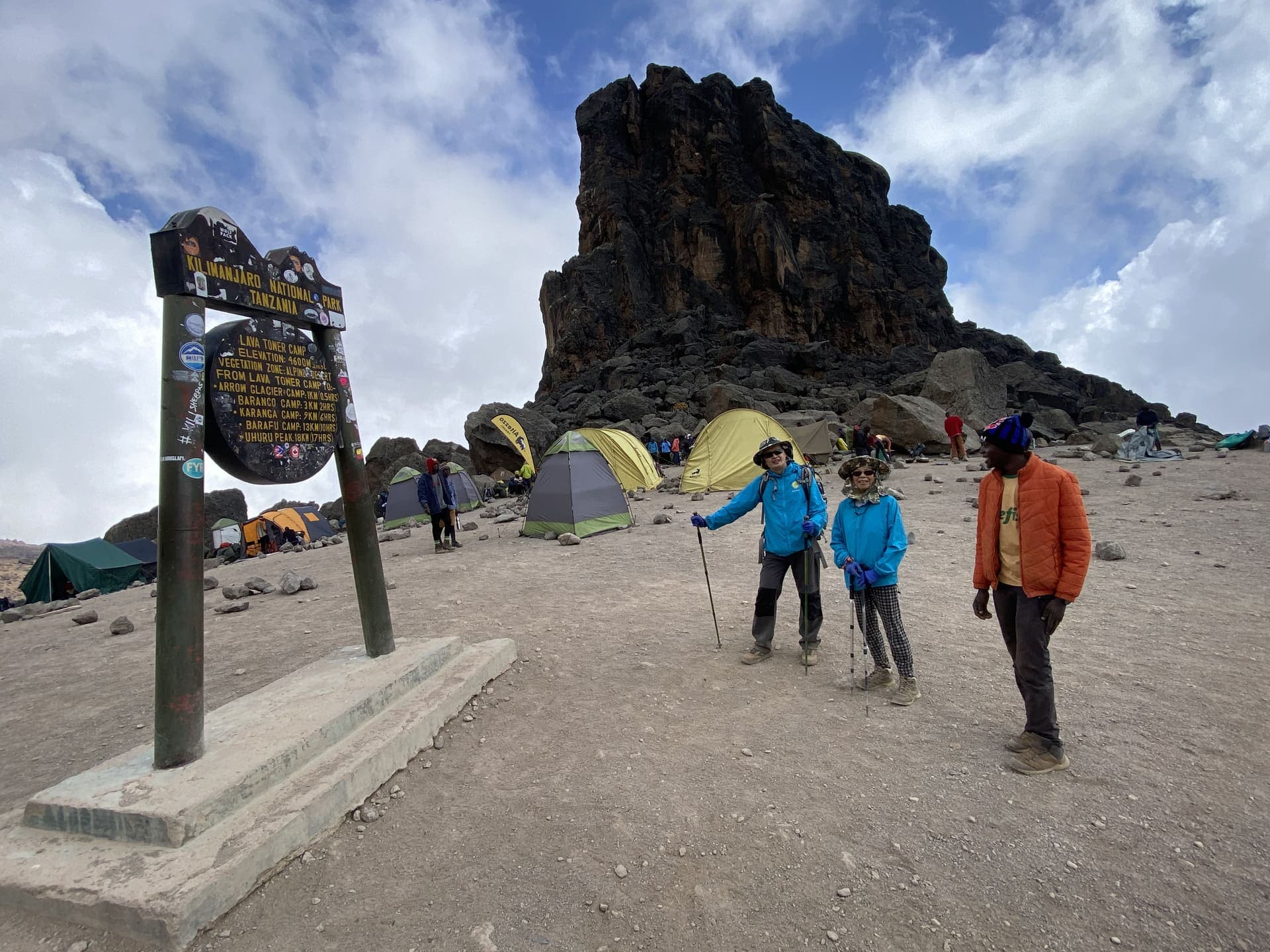
Kilimanjaro via Rongai Route
Departing 3 August 2026 · 6 days
$1,900/person
Reserve with $200 deposit
Rongai is Kilimanjaro's only northern approach — the quiet, drier route that climbs in from the Kenya side through open moorland that most climbers never see. This 6-day version adds a crucial acclimatisation day at Second Cave, meaningfully improving your odds of reaching Uhuru Peak at 5,895 m on a steady, manageable gradient ideal for first-time climbers.
- ✓The only route up Kilimanjaro from the northern, Kenya side
- ✓Far fewer crowds than the busy southern Machame and Marangu routes
- ✓Drier approach — the best choice during the April–May long rains
- ✓Acclimatisation rest day at Second Cave to protect summit success
- ✓Open moorland views of the Amboseli basin and, on clear days, Mount Kenya
Day-by-Day Itinerary
Route profile
6 days · 55 km
- 1
Arusha to Rongai Gate, trek to First Cave Camp
A scenic 5–6 hour drive north around the mountain to the quiet Rongai Gate, then a gentle first climb through pine plantation and native rainforest — colobus monkeys overhead — to First Cave Camp, just above the treeline with your first open view of the summit.
2,600 m3–4 hours7.5 kmLunch, dinner · First Cave Camp (tents)
- 2
First Cave Camp to Second Cave Camp
One of the finest days on the route, crossing open heath and moorland of giant heather and lobelia with Kibo rising ahead. Second Cave sits on open moorland with views to the Kenyan plains, followed by a short 'climb high, sleep low' acclimatisation walk to about 3,700 m.
3,450 m4–5 hours8.5 kmBreakfast, lunch, dinner · Second Cave Camp (tents)
- 3
Acclimatisation day at Second Cave
The strategic heart of the itinerary. A short walk up to Kikelewa Cave (about 3,600 m) and back gives your body extra altitude exposure before returning to sleep low, with rest, hydration, health monitoring and a full pre-summit briefing — the single biggest investment in summit night.
3,600 m2–3 hours4 kmBreakfast, lunch, dinner · Second Cave Camp (tents)
- 4
Second Cave Camp to Kibo Huts / School Hut
Leave the moorland for Kilimanjaro's stark alpine desert — a vast rust-coloured plain of volcanic scree beneath the crater wall, with rare views of the northern icefields. Arrive early at the high camp, eat an early dinner and rest before the 11pm summit start.
4,750 m5–7 hours9 kmBreakfast, lunch, dinner · Kibo Huts / School Hut Area (tents)
- 5
Summit night — Uhuru Peak, descend to 3,100 m
Wake at 11pm for the steep, thin-aired climb by headlamp up the northern approach to Gilman's Point (5,685 m) on the crater rim, then the final traverse to Uhuru Peak, 5,895 m — the roof of Africa — for sunrise. A long descent all the way down to camp at around 3,100 m.
5,895 m12–14 hours16 kmBreakfast, lunch, dinner · Horombo / Mweka area (tents)
- 6
Final descent to Mweka Gate, return to Arusha
A leisurely final descent through lush montane forest to Mweka Gate, where your summit certificate and the tipping ceremony with your crew await. Transfer back to your Arusha hotel — tired, triumphant and at sea level again.
1,800 m3–4 hours10 kmBreakfast · —
What's included
- ✓All Kilimanjaro National Park entry, conservation and rescue fees, VAT and taxes
- ✓Certified senior guide and qualified assistant guides (1 per 4 climbers)
- ✓Professional mountain chef and full porter team
- ✓Quality dome tents (two-share), private group dining tent and toilet tent
- ✓All meals on the mountain, hot drinks throughout, and sleeping mats
- ✓Road transfers to/from your Arusha hotel, pre-climb briefing and gear check
- ✓Emergency oxygen and daily pulse-oximetry checks for every climber
Not included
- ✕International flights to Kilimanjaro (JRO) and Tanzania visa
- ✕Travel and medical insurance (required — must cover trekking to 6,000 m)
- ✕Personal trekking gear and sleeping bag (hire in Arusha from $20–30)
- ✕Tips for the mountain crew (budget roughly $250–350 per climber)
- ✕Alcoholic and other personal-nature expenses
Reserve your spot
Rongai Route · 3 Aug – 8 Aug 2026 · $1,900 per person.
Prefer to chat? Message Ombeni on WhatsApp.
Frequently Asked Questions
Not the right date?
See all Kilimanjaro group departures
Browse every upcoming guaranteed departure, or ask us to set one up for your dates.