
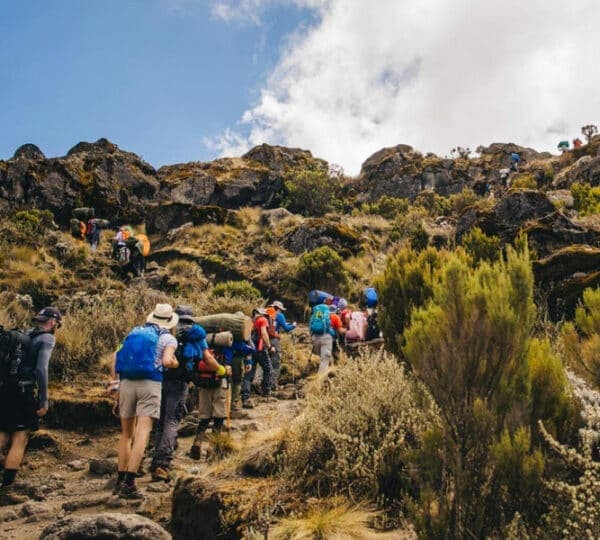
Kilimanjaro via Marangu Route
Departing 7 February 2027 · 6 days
$1,450/person
Reserve with $200 deposit
Experience one of Tanzania's classic mountain adventures on the Marangu Route, a well-known trail to the summit of Mount Kilimanjaro — Africa's highest mountain at 5,895 metres (19,341 feet).
- ✓Sleep in mountain huts at Mandara, Horombo and Kibo instead of tents
- ✓A dedicated acclimatisation day at Horombo Hut with a hike towards Zebra Rocks
- ✓Giant groundsels and lobelias in the moorland zone
- ✓Views of Mawenzi and Kibo across the high-altitude Saddle
- ✓Summit via Gilman's Point on the crater rim
Day-by-Day Itinerary
Route profile
6 days on the mountain · highest point 5,895 m · about 53 km
Swipe sideways to see every day →
- 1
Day 1
Marangu Gate to Mandara Hut — Trek Through the Rainforest
1,860 m → 2,720 m8 km4–5 hours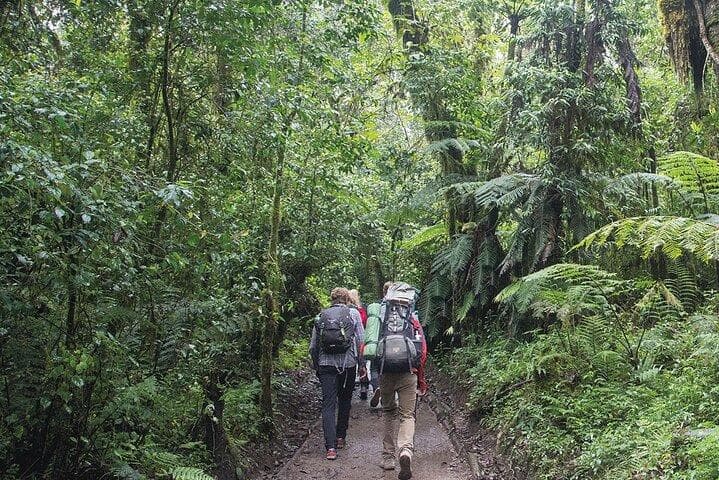
After breakfast at your hotel, your guide and mountain support team will meet you for the transfer to Marangu Gate, the eastern entrance to Kilimanjaro National Park. Once registration, permit checks and the required formalities are complete, you will begin the first stage of your climb.
The trail passes through lush montane rainforest, where tall trees, ferns, mosses and dense vegetation create a cool and green environment. Listen for birds and look out for monkeys in the canopy, although wildlife sightings are not guaranteed. The forest can be humid, and rain is possible, so waterproof clothing and suitable hiking boots are important.
Your guide will set a steady pace, allowing time for breaks, water and lunch. Moving slowly from the beginning is important because the mountain is not a race; maintaining a comfortable pace helps conserve energy for the higher and more challenging sections ahead.
You will arrive at Mandara Hut, a mountain accommodation area with shared sleeping facilities. After settling in, you may have time for a short optional walk towards Maundi Crater if weather, time and your guide's advice allow. Return to the hut for dinner, a briefing about the next stage and your first night on Kilimanjaro.
- Overnight:
- Mandara Hut, 2,720 m
- Meals:
- Lunch and dinner
- 2
Day 2
Mandara Hut to Horombo Hut — Enter the Moorland Zone
2,720 m → 3,720 m12 km5–7 hours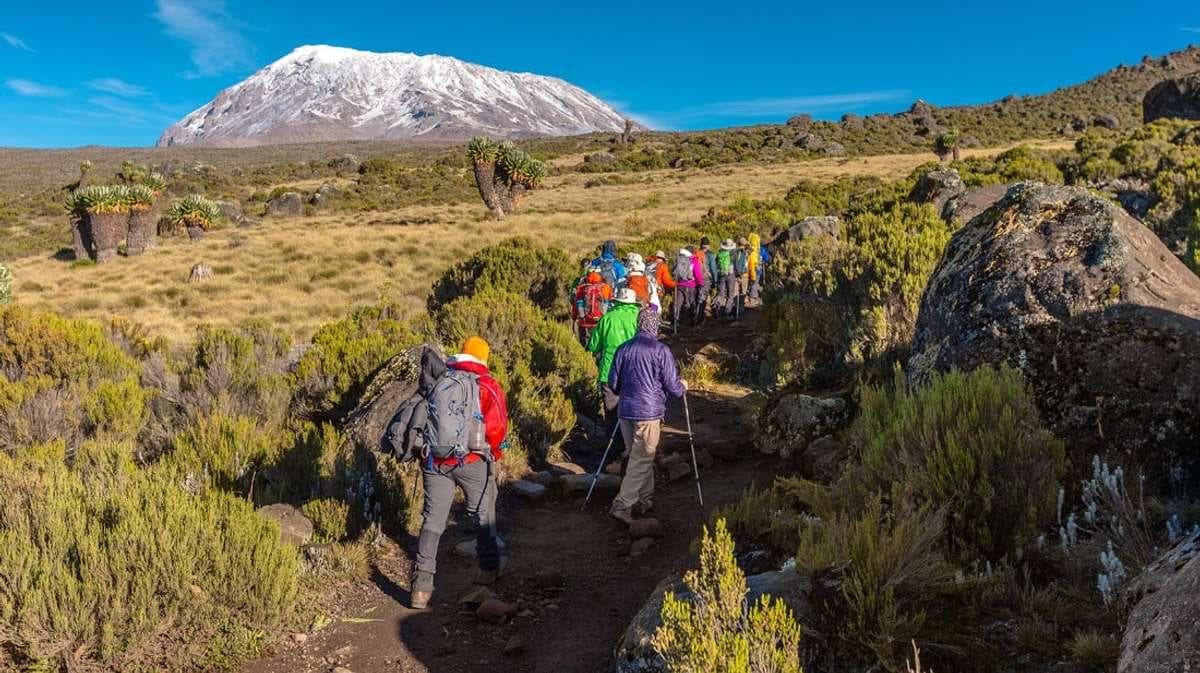
After breakfast, leave Mandara Hut and continue uphill through the upper forest before the vegetation gradually opens into heathland and moorland. The scenery becomes wider and more dramatic as the trail rises above the dense forest. On a clear day, you may see the distinctive peaks of Mawenzi and Kibo, two of Kilimanjaro's major volcanic features.
This section is longer than the previous day's walk, so take your time and follow your guide's recommended pace. You may notice that breathing becomes harder as the altitude increases. Drink water regularly, eat your meals and report any symptoms such as headaches, dizziness, nausea or unusual fatigue to your guide.
The moorland environment has unusual high-altitude plants, including giant groundsels and lobelias. These plants are part of what makes Kilimanjaro's upper slopes so distinctive, with landscapes that look very different from the tropical forest below.
Arrive at Horombo Hut in the afternoon, where you will spend two nights. The extra night is an important part of this six-day itinerary because it allows time for an acclimatisation hike before the climb continues to higher elevation.
- Overnight:
- Horombo Hut, 3,720 m
- Meals:
- Breakfast, lunch and dinner
- 3
Day 3
Acclimatisation at Horombo Hut — Hike Higher, Return to Sleep Lower
3,720 mHighest point 4,000 m4–6 (round trip) km2–4 hours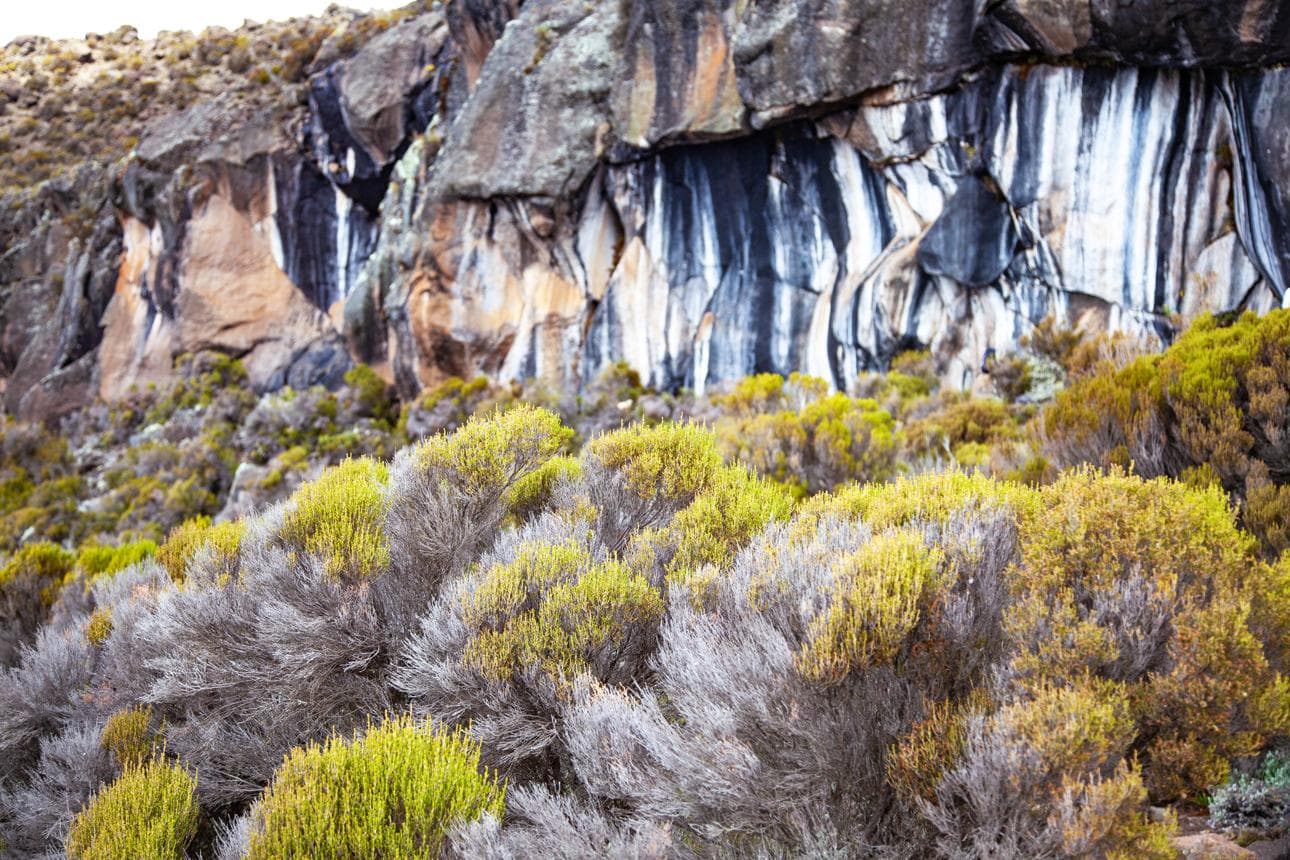
Today is dedicated to helping your body adjust to the increasing altitude. After breakfast, your guide may lead an acclimatisation walk towards Zebra Rocks or another suitable nearby viewpoint, depending on weather, trail conditions and the group's condition. You will then return to Horombo Hut to spend the night at the same elevation.
The purpose of the walk is to gain some height during the day without sleeping at that higher point. This approach is often described as “climb high, sleep low” and can support acclimatisation. However, it does not eliminate the risk of altitude sickness, and the correct pace and response to symptoms remain essential.
Take time to enjoy the mountain scenery and views towards Mawenzi and Kibo. Your guide will monitor how the group is feeling and may shorten or change the walk if anyone shows signs of illness. This is not a day to push for speed or compete with other climbers.
The afternoon should be spent resting, eating well, drinking water and preparing for the next stage. Your crew will provide meals and explain what to expect on the walk to Kibo Hut, where the summit attempt begins after a period of rest.
Important: If you experience symptoms of altitude illness, tell your guide promptly. Severe or worsening symptoms require professional assessment and may mean you must stop ascending or descend.- Overnight:
- Horombo Hut, 3,720 m
- Meals:
- Breakfast, lunch and dinner
- 4
Day 4
Horombo Hut to Kibo Hut — Cross the Alpine Desert
3,720 m → 4,703 m10 km5–7 hours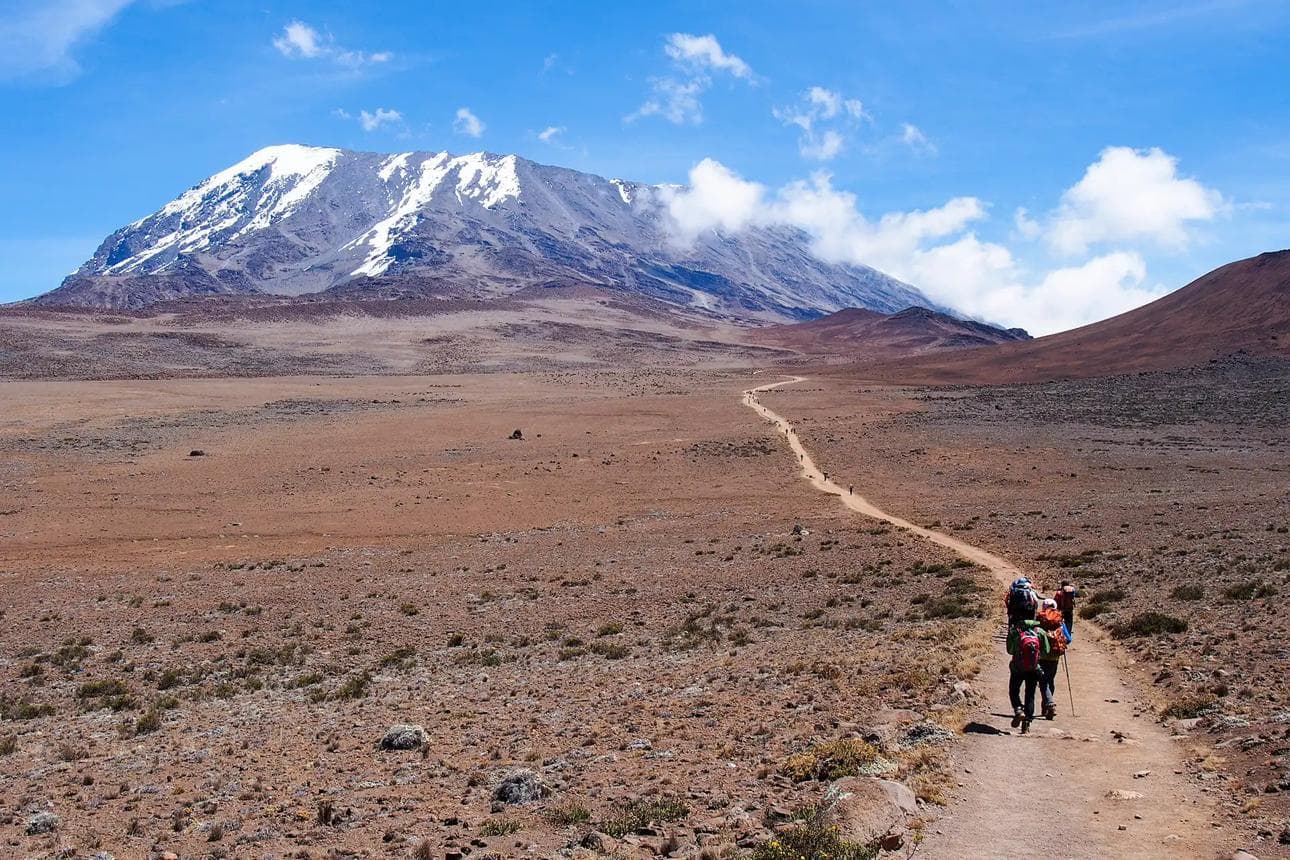
After breakfast, leave Horombo Hut and cross the broad, high-altitude landscape known as the Saddle, which lies between Mawenzi and Kibo. The lush vegetation of the lower slopes gradually gives way to a drier, more exposed environment with sparse plant life, volcanic ground and expansive views.
This stage can feel physically demanding because of the elevation, even though the trail is not technically difficult in the mountaineering sense. Walk slowly, keep warm and follow your guide's instructions. The weather can change quickly, and temperatures may drop considerably as you approach Kibo Hut.
Upon arrival, settle into the hut and prepare for the summit attempt. Your guide will discuss the timing, clothing layers, headlamp, water, snacks and safety procedures needed for the night climb. You will normally have an early meal and try to rest before setting off around midnight or at a time determined by your guide and conditions.
Good preparation is particularly important because the summit day combines a steep ascent in darkness with a long descent. Keep your essential equipment accessible and avoid unnecessary activity before resting.
- Overnight:
- Kibo Hut, approximately 4,703 m
- Meals:
- Breakfast, lunch and an early dinner
- 5
Day 5
Summit Day — Kibo Hut to Uhuru Peak and Descent to Horombo Hut
4,703 m → 3,720 mHighest point 5,895 m10–15 hours or longer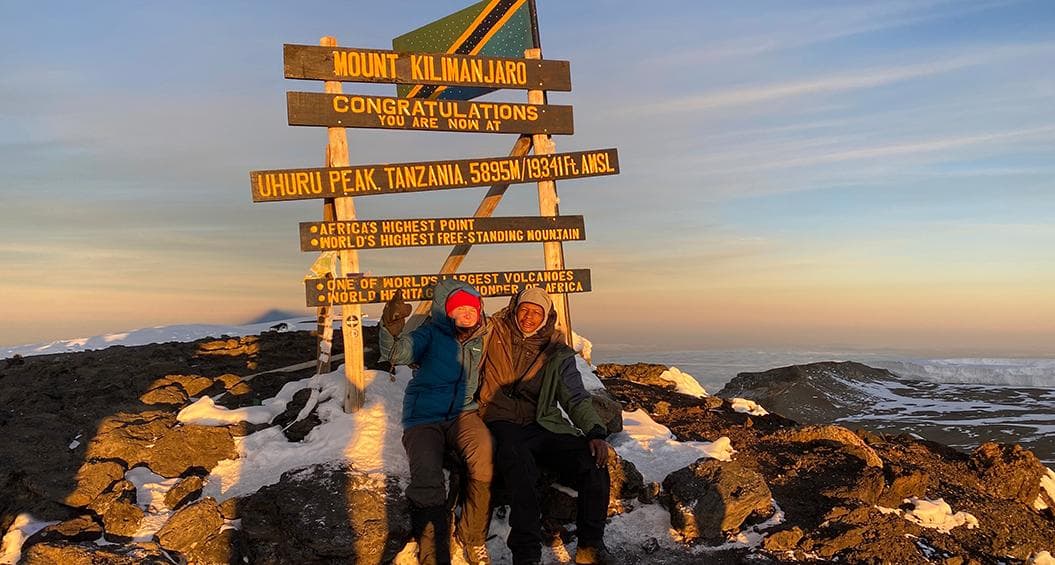
Summit day begins very early, usually around midnight, after a short rest at Kibo Hut. With your guide, you will begin the slow ascent over steep, rocky terrain towards Gilman's Point on the crater rim. The climb is physically demanding because of the steep slope, cold temperatures, darkness and limited oxygen at high altitude.
Your guide will set a cautious pace and monitor the group closely. Short breaks help manage effort, but it is essential to remain alert to signs of altitude illness. If your condition becomes unsafe, your guide may decide that you should turn back or descend. Reaching the summit is a goal, but safety must always take priority.
After reaching Gilman's Point, climbers who are well enough and conditions permit will continue along the crater rim towards Uhuru Peak, at 5,895 metres, the highest point in Africa. If you reach the summit, you can celebrate the achievement and take photographs, while following the guide's advice about the time available at the top and the conditions.
The descent begins after the summit visit. You will return towards Kibo Hut for a short rest, then continue down to Horombo Hut. Descending is also demanding, especially after the long climb, so take care on loose ground and follow your guide's instructions.
Summit note: Uhuru Peak is the target, not a guarantee. The final decision to continue is based on your condition, the guide's assessment and mountain safety.- Overnight:
- Horombo Hut, 3,720 m
- Meals:
- Summit-night refreshments and meals
- 6
Day 6
Horombo Hut to Marangu Gate — Final Descent and Certificates
3,720 m → 1,860 m18 km5–7 hours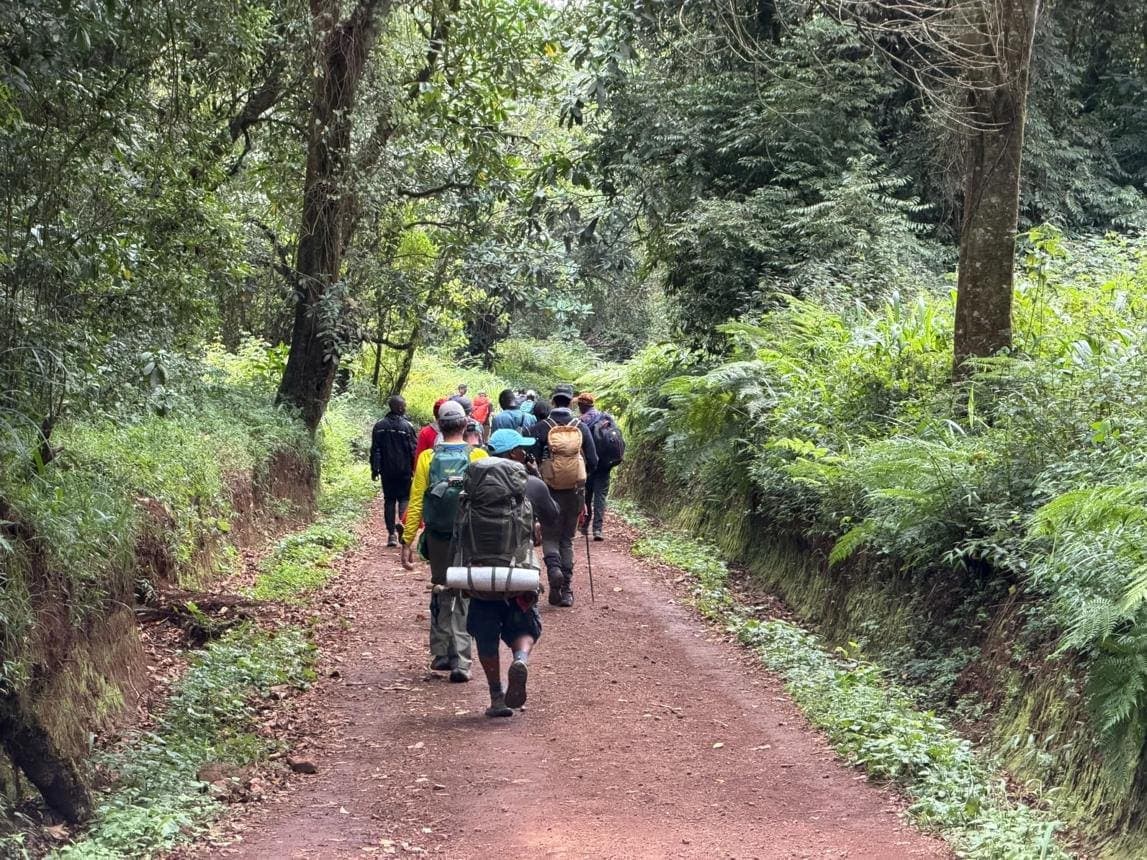
After breakfast at Horombo Hut, begin the final descent towards Marangu Gate. The route retraces the trail through the moorland and rainforest, allowing you to experience the mountain's changing vegetation once again as you lose altitude.
Although descending generally requires less cardiovascular effort than climbing uphill, the long distance can be tiring on the knees and legs. Use your trekking poles if you have them, maintain a controlled pace and take care on wet or uneven ground. Your guide will coordinate breaks and ensure the group stays together.
At Marangu Gate, complete the required checkout procedures. Climbers who qualify will receive the appropriate Kilimanjaro summit or participation certificate according to the highest point reached. Your driver will then transfer you to your hotel in Moshi or Arusha, depending on your booking.
After several days at altitude, a warm shower, comfortable bed and proper rest can feel especially rewarding. If your travel schedule allows, we recommend an extra hotel night after the climb before taking a long international flight or starting another demanding activity.
- Overnight:
- Transfer to your hotel in Moshi or Arusha
- Meals:
- Breakfast and lunch
What's included
- ✓Kilimanjaro National Park charges: Applicable park entry and conservation fees for the six-day itinerary, subject to the official tariffs in force for your travel dates.
- ✓Mountain hut accommodation: Five nights in the designated mountain huts — normally one night at Mandara Hut, two nights at Horombo Hut before and after the summit attempt, and one night at Kibo Hut. Accommodation is shared and subject to park allocation.
- ✓Professional mountain guide team: Licensed and appropriately qualified mountain guides, with supporting crew arranged for the expedition.
- ✓Porter and mountain support services: The porter team required to transport agreed expedition supplies and assist with the normal logistics of the climb.
- ✓Mountain meals: Breakfast, lunch and dinner on the mountain, with the precise meal plan for the summit attempt confirmed in writing.
- ✓Drinking water: Drinking water treated or prepared according to the operator's arrangements; bring a reusable bottle or hydration system.
- ✓Transfers for the climb: Road transfers between your agreed Moshi or Arusha pickup point and Marangu Gate, as specified in the final quotation.
- ✓Expedition coordination: Pre-climb briefing, route arrangements, park registration coordination and logistical planning for the scheduled six-day climb.
- ✓Basic safety procedures: Guide monitoring, communication arrangements and the applicable park rescue arrangements included in the confirmed package. These are not a promise of helicopter evacuation or unlimited medical treatment.
- ✓Summit certificate arrangements: Assistance with the applicable certificate procedures for climbers who qualify under park rules.
- ✓Applicable taxes and charges: Any taxes and mandatory charges included in the final quotation are identified clearly rather than left ambiguous.
Not included
- ✕Accommodation before or after the climb: Hotel nights in Arusha or Moshi (can be added).
- ✕Airport transfers not specified: Transfers to or from Kilimanjaro International Airport or another airport.
- ✕International flights: Flights to and from Tanzania, including any connecting flights.
- ✕Visa and entry documents: Tanzanian visa charges, passport expenses and any required travel documentation.
- ✕Travel and medical insurance: Insurance suitable for high-altitude trekking, including cover for trekking to 6,000 metres, emergency medical care and evacuation where available under the policy.
- ✕Personal trekking equipment: Hiking boots, thermal base layers, waterproof jackets and trousers, insulated gloves, sleeping bags, trekking poles, headlamps and other personal gear, unless equipment rental is expressly included.
- ✕Tips and gratuities: Tips for guides, assistant guides, porters, cooks and other mountain crew — budget about $350–$550 per climber for the six days.
- ✕Personal purchases: Snacks, soft drinks, alcoholic beverages, souvenirs, laundry, telephone charges and other personal expenses.
- ✕Medication and personal medical supplies: Prescription medication, personal first-aid items and medical consultations before or after the climb.
- ✕Additional hotel meals and services: Meals, drinks, room upgrades and other services outside the mountain package.
- ✕Emergency expenses outside the package: Hospital bills, medical treatment, specialist evacuation, helicopter rescue or other expenses not expressly covered by the operator or your insurance policy.
- ✕Extra nights or itinerary changes: Additional accommodation, transport or logistical costs caused by schedule changes, an extended stay or arrangements outside the confirmed itinerary.
- ✕Other optional activities: Any safari, cultural excursion, Zanzibar extension or additional tour not listed in the written quotation.
Reserve your spot
Marangu Route · 7 Feb – 12 Feb 2027 · $1,450 per person.
Step 1 out of 2
Takes about 2 minutes
Your trip: Marangu Route
Who will you be travelling with?
Prefer to chat? Message Ombeni on WhatsApp.
Frequently Asked Questions
Not the right date?
See all Kilimanjaro group departures
Browse every upcoming guaranteed departure, or ask us to set one up for your dates.